 ©JAPANandmore.com
Sumo in Japan: What You Need to Know
Sumo in Japan is far more than two massive athletes colliding in a ring. If you show up expecting nothing more than a wrestling match, you’re going to miss most of what’s actually happening. To really enjoy it, you need to understand what you’re watching, because sumo runs on centuries of custom that a casual spectator can easily miss.
CONTENTS
What is Sumo in Japan?
Sumo traces its roots back over a thousand years to agricultural rituals performed to entertain the Shinto gods and pray for a good harvest. What we see today at a Grand Tournament, known as a honbasho, is living Japanese history. Most of the ceremony, the ring itself, and the etiquette around it were formalized during the Edo period (1603–1868), and it’s been running the same ever since.
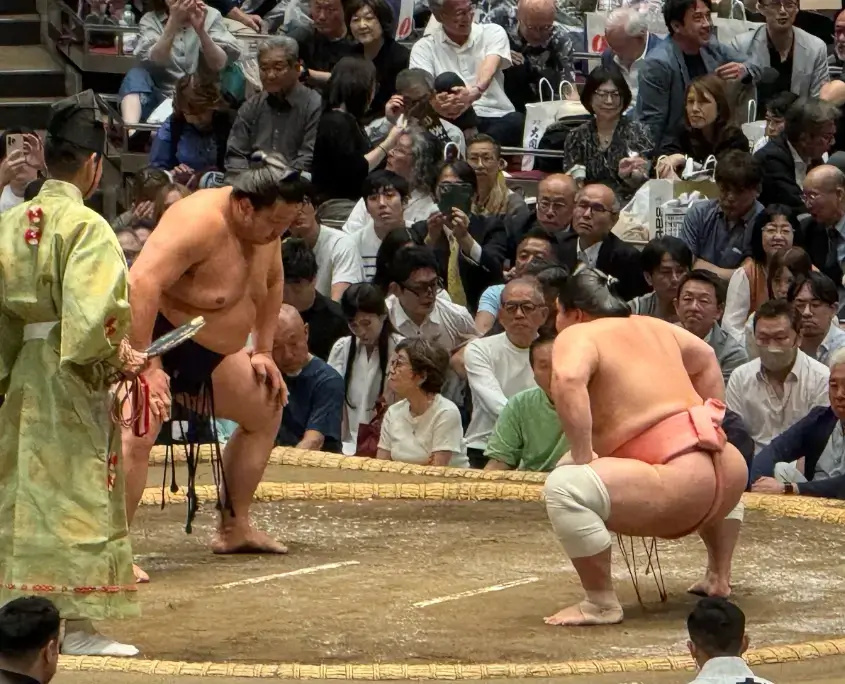
Two Sumo Wrestlers Getting Ready for Battle
Where to Watch Sumo
There are six Grand Tournaments a year. Many tourists assume sumo is something you can catch anytime, anywhere. It’s not. Miss the window, and you’re watching a stable practice session instead of the real thing.
Each tournament runs 15 days straight, always starting on a Sunday and ending on a Sunday. Six of these run every year, split across four cities.
- Tokyo: Held in January, May, and September at the Ryōgoku Kokugikan
- Osaka: Held in March at the Edion Arena
- Nagoya: Held in July at the IG Arena
- Fukuoka: Held in November at the Fukuoka Kokusai Center
Tokyo gets three of the six because that’s where the sport is headquartered. All of Japan’s sumo stables, called heya in Japanese, are based in the Kanto region, so Tokyo is the default home.
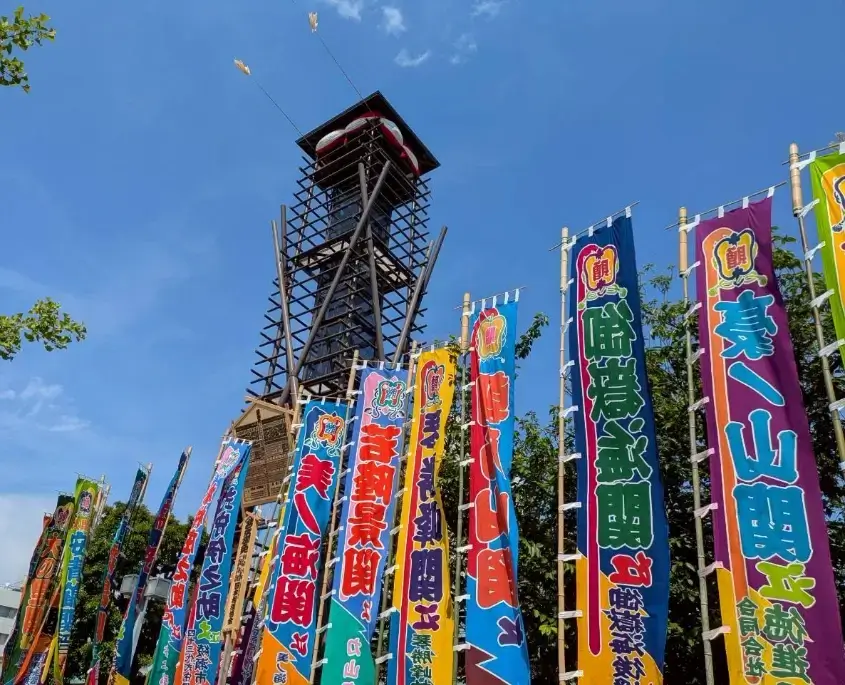
Outside of the Tokyo Ryougoku Kokugikan
Wrestler Divisions and Ranks
Wrestlers are called rikishi, and they’re ranked on a hierarchy called the banzuke. Professional sumo is split into six divisions.
- Makuuchi: The top division featuring the biggest stars, Ozeki champions, and Yokozuna grand champions.
- Juryo: The second tier of salaried professional wrestlers.
- Makushita: The third division.
- Sandanme: The fourth division.
- Jonidan: The second-to-lowest division.
- Jonokuchi: The entry-level professional division.
In the top divisions, each wrestler competes once per day across all 15 days, and their win-loss record over the entire tournament determines whether they move up or down the ranks for the next tournament.
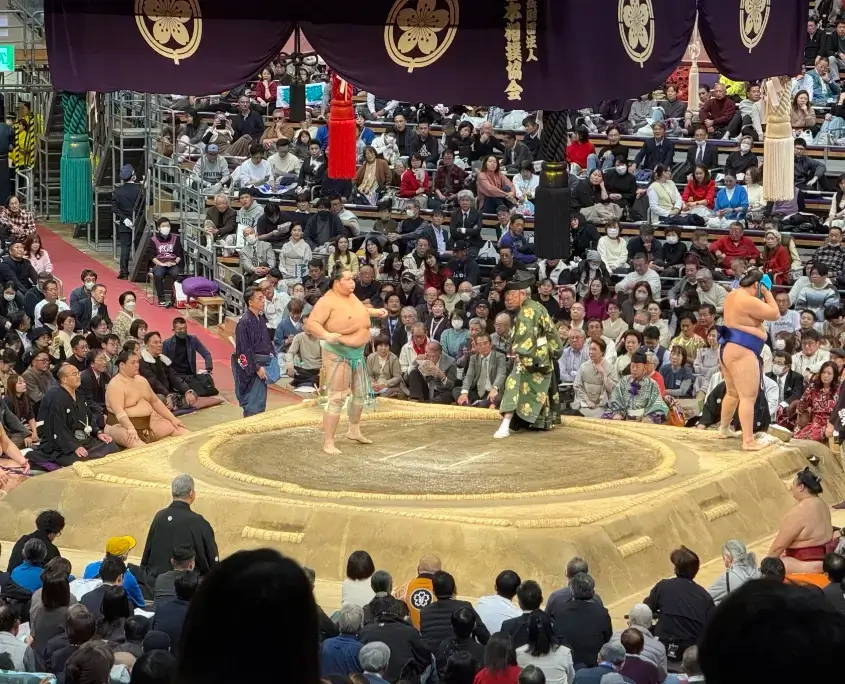
Ozeki Kotozakura Getting Ready for His Match
Daily Tournament Schedule
A full day of sumo runs from morning until early evening that looks roughly like this:
- 9:20 AM – 2:00 PM: Lower division matches, Jonokuchi through Makushita. The stadium is quiet and mostly empty.
- 2:15 PM: Juryo entrance.
- 2:35 PM: Juryo division matches begin. The arena starts filling up.
- 3:40 PM: Makuuchi Ring-Entering Ceremony, followed by the Yokozuna Grand Champion Ritual Entry.
- 4:05 PM: Makuuchi division matches begin.
- 5:30 – 6:00 PM: High-stakes Makuuchi bouts featuring top division stars, Ozeki, and Yokozuna.
- 6:00 PM: Matches conclude with the traditional Bow-Twirling Ceremony.
The biggest mistake I see most tourists make is that they show up at noon expecting a full house and intense rikishi action. Instead, they find a half-empty arena with almost no energy at all. They get bored and end up leaving before the real show begins.
You don’t need to sit in the arena for nine hours. The best time to arrive is somewhere between 3:00 PM and 3:30 PM. This gives you enough time to find your seats, grab some food and drinks, and settle in before the major ceremonies begin.
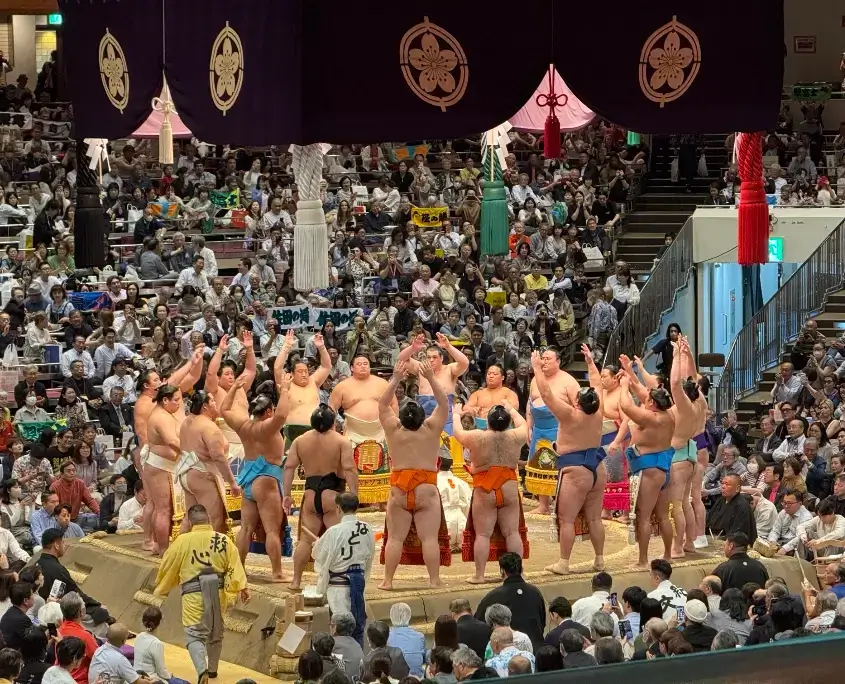
Rishiki Performing the Ring Ceremony Before Wrestling
Seating Classes and Venue Layout
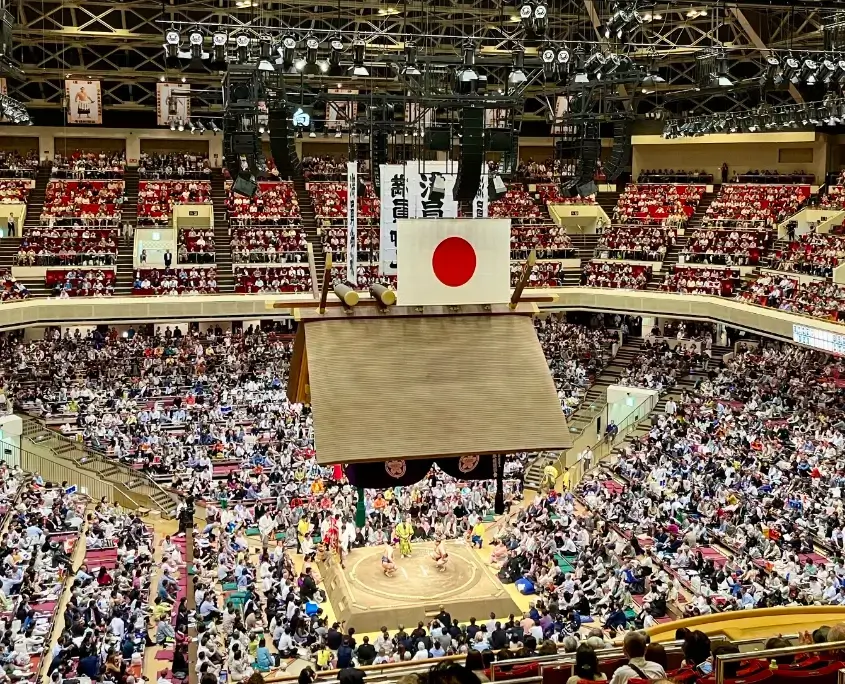
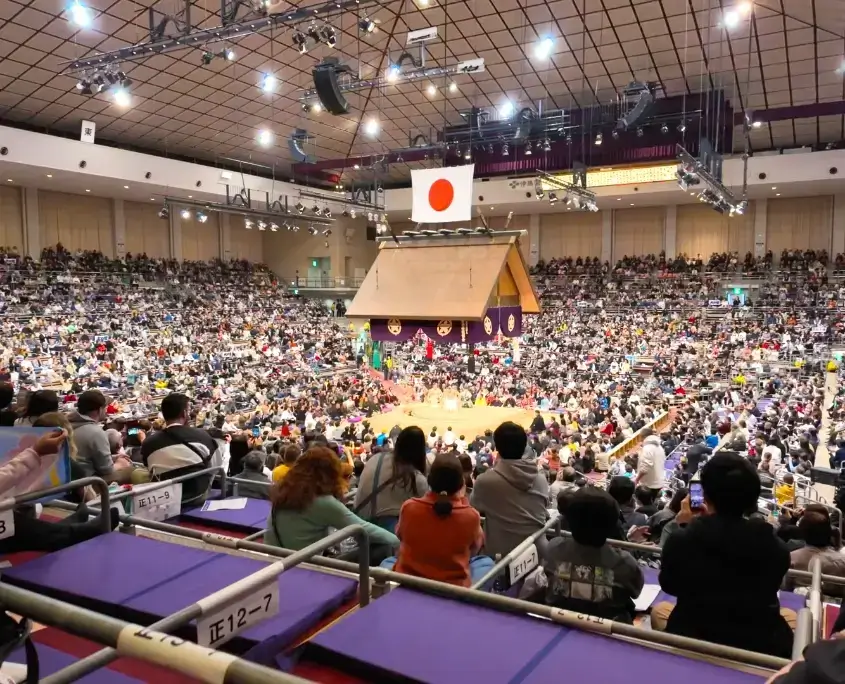
The seating at a sumo arena looks a little different from most stadiums. All Sumo venues have three primary seating options.
Ringside Seats (Tamari-seki)
These are floor cushions in the rows closest to the ring. Food, drinks, phone calls, and photography are banned in these seats because a sumo wrestler falling on you is a real possibility. These seats are notoriously difficult to get.
Box Seats (Masu-seki)
These are traditional square compartments with four cushions on the floor. They’re usually 4.5 square feet (0.42 m²) and meant to hold four adults. You need to take your shoes off before stepping in. Never, under any circumstances, step on your neighbor’s cushion or cut across someone else’s box to get to yours.
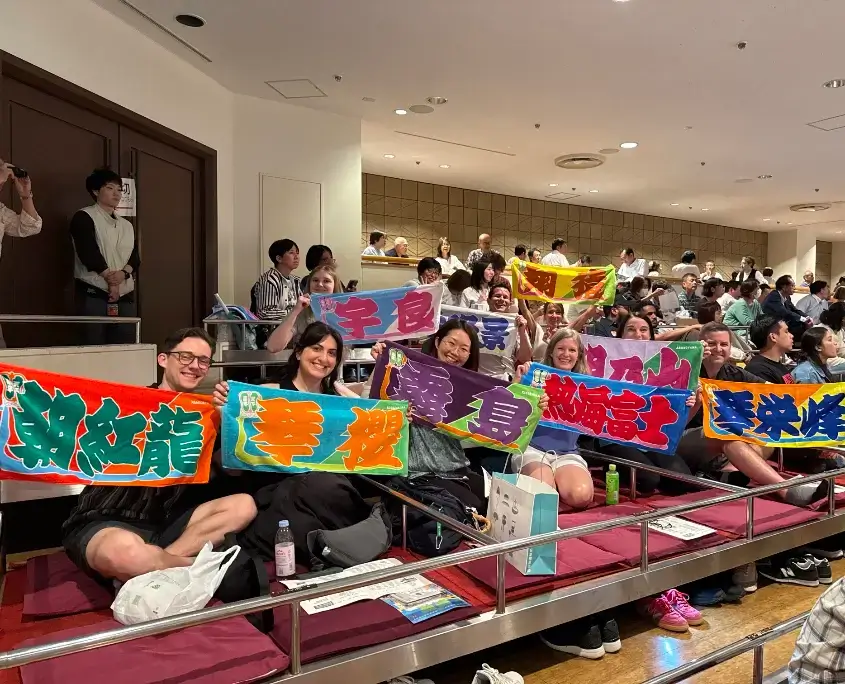
Our May 2026 Spring Tour Group Seated in the Box Seats in Tokyo
Balcony Seats (Isu-seki)
These are standard Western-style arena chairs. If sitting cross-legged on a cushion for hours doesn’t sound like something you want to do, then this is where you should sit.
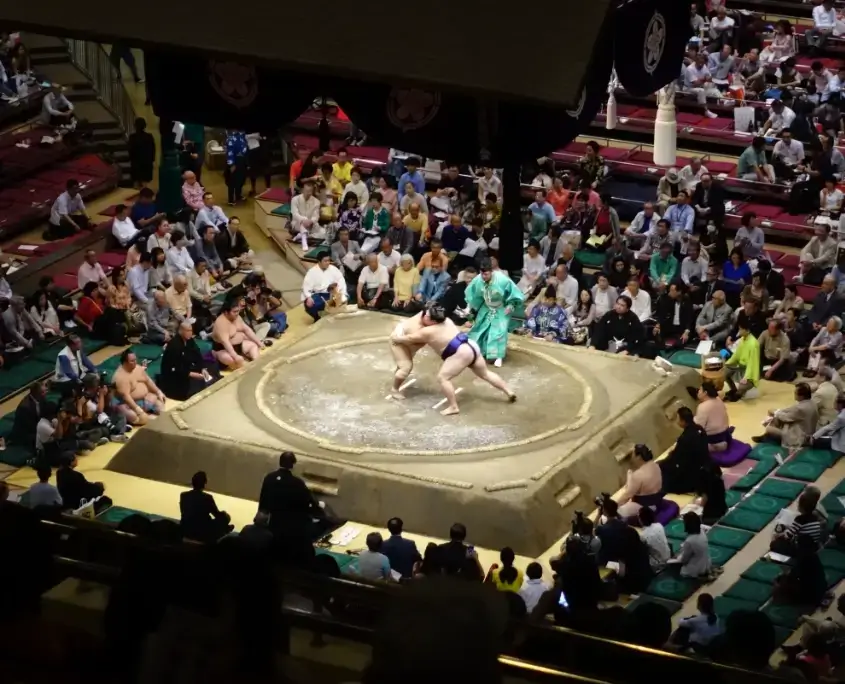
View of Sumo Match From Stadium Style Seats
Sacred Boundaries and Shinto Traditions
The clay ring that the rishiki wrestle on is a consecrated sacred space known as the dohyo. Before every tournament, a Shinto priest performs a traditional purification ceremony over the ring and buries sacred offerings directly beneath the clay.
When you watch the top divisions compete, you’ll also notice the wrestlers grabbing handfuls of salt and tossing it into the ring before they fight. It looks dramatic, but it’s a centuries-old Shinto ritual that purifies the ring and protects the wrestlers from injury.
Arena Etiquette
Cheering
Sumo spectators aren’t quiet. But there are instances when the crowd goes completely silent, and it’s considered bad form to break that silence.
Shouting is completely fine during the pre-match preparation, the salt-throwing, and the ring-entering ceremonies. It’s customary for fans to call out a wrestler’s ring name or yell Ganbatte to cheer them on.
However, the arena goes completely silent the second both wrestlers put their fists down on the clay for the initial charge, the tachi-ai.
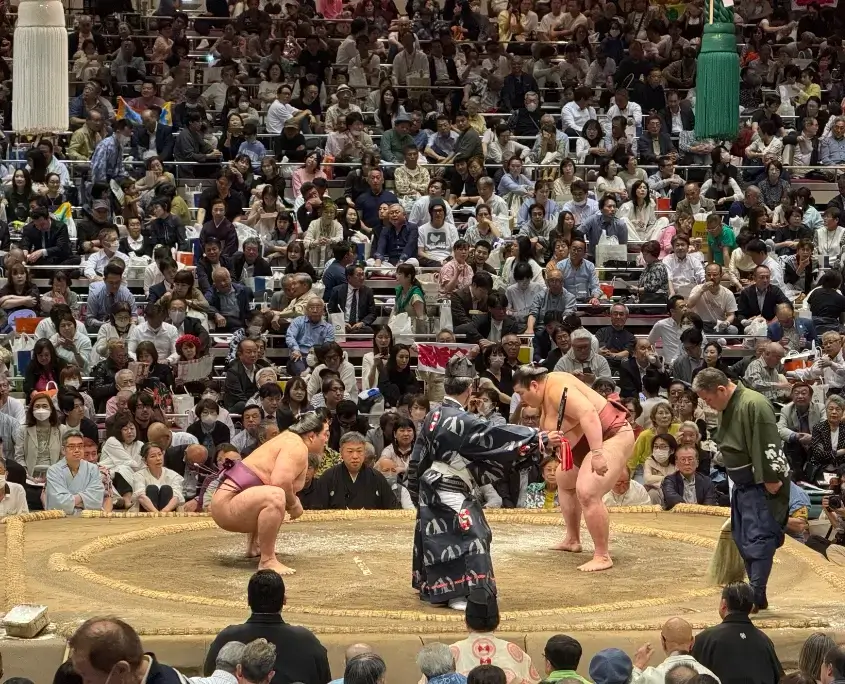
Atamifuji About to Tachi-ai
Movement
One important rule of sumo is that spectators should stay seated during any active bout. Standing up in the middle of a match blocks the view of everyone behind you. If you leave your seat to use the restroom or grab a drink, ushers will hold you at the top of the aisle until the referee signals that the match is over.
If you buy your favorite wrestler’s support towel, called an oen, be sure to only hold it across your chest. Never raise the towel above your head because this could block the view of the people sitting behind you.
Never throw your zabuton seat cushion. You might have seen footage of fans tossing cushions toward the ring after an upset victory. The Japan Sumo Association officially banned this practice because loose cushions hit other spectators.
Zabuton Seat Cushion in Box Seats
Food, Drinks, Photography, and Luggage
Eating and drinking are completely fine in both Box and Balcony seats. Many people pick up lunch inside the venue, and stadium kiosks sell cold beer, sake, snacks, and bento boxes.
You’re welcome to take photos from your seat in the Box and Balcony sections. However, flash photography is discouraged inside the stadium.
Do not bring suitcases or oversized backpacks into the venue. There isn’t enough space in and around your seat.
Key Takeaway
Attending sumo in Japan gives you a front-row seat to ancient ritual and elite athletic competition. If you want to experience authentic Japanese culture on your trip, planning your schedule around a tournament is well worth the effort.
Attending a Grand Tournament in person is always a trip highlight with our small group tours. If you can get tickets, we highly recommend including the Tokyo Grand Sumo Tournament on your next trip to Japan.
Want a Unique Japan Trip?
Discover Japan planning secrets with our best-selling Itinerary Planning Course. Or inquire about our exclusive Small Group Tours.
 ©JAPAN and more
 ©JAPANandmore.com
 ©JAPANandmore.com
 @JAPANandmore
 ©JAPANandmore.com



 ©JAPANandmore.com