 ©JAPANandmore.com
Souvenirs in Japan: What to Buy on Your Holiday
Buying souvenirs in Japan is one of the best parts of any trip, and it’s a lot more than grabbing a Godzilla t-shirt from a novelty shop. Although there’s nothing wrong with that, I want to help you find the one-of-a-kind shops.
CONTENTS
I’m talking about the shops that have been run by the same family for hundreds of years and the pottery towns where you can still meet the craftsmen who make their bowls by hand. Japan has entire towns and even entire families that have been making one thing, and only one thing, for centuries.
So let’s get into it. Here’s my list of what to buy and, more importantly, where to buy it.
Deer-Skin Wallets
If you want a wallet that will outlast you, look for Koshu Inden. Deerskin leather decorated with lacquer. The craft comes from Kofu, in Yamanashi Prefecture, and it dates all the way back to the samurai battlefields, when warlords preferred deerskin for armor because of its strength-to-weight ratio.
Originally founded in 1582, Inden-ya is one of the biggest manufacturers of lacquered Japanese deerskin. Craftsmen apply lacquer onto dyed leather. The lacquer leaves a slightly raised pattern that feels similar to a small piece of colored glass.
Just like everything in Japan, the patterns themselves have significance.
- Katsumushi Dragonfly: Favored by the samurai because it only flies forward, never backward, so it became a symbol of victory.
- Sakura Cherry blossom: The fleeting beauty of life.
- Ayame Iris: Symbolizes strength and protection against misfortune.
My wallet is blue with the dragonfly pattern. Once I found out what the pattern meant, there wasn’t really another option. It’s been through years of trips in and out of my back pocket, and it’s holding up beautifully.
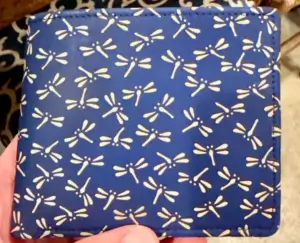
My Inden-ya Deerskin Wallet
Where to Buy Koshu Inden
If you do any amount of shopping while in Japan, you’ll probably come across one of these wallets. They’re often found at high-end department stores and inside shops around tourist areas.
In Tokyo, you’ll find the official Inden-ya shop just a 4-minute walk from Exit 1B of the Gaiemmae Station on the Ginza Line.
Maekawa Inden is another big player in the deerskin wallet industry. They’ve been around since 1958, and their main shop is located on Orange Street, just two blocks west of Nakamise, the walking street that leads to Sensoji in Asakusa.
Matcha Green Tea
If you like matcha, or even if you just like green tea in general, you need to bring some home. Skip the tins at the airport and go straight to the source, Kyoto. That’s right, a small city in Kyoto Prefecture called Uji is known as the birthplace of Matcha.

Tea Master Making Matcha
If you’ve had nothing but bitter matcha drinks that only taste better with a cup of sugar, then you’re missing out. Fresh matcha is delicious, slightly sweet, and healthy.
Even regular green tea from the area is some of the best on the market. Because Kyoto sits inland at a high elevation, it has the perfect weather for growing green tea.
Where to Buy Green Tea
Our favorite matcha is Marukyu Koyamaen. They’ve been producing matcha since 1704 and are considered one of the top matcha manufacturers in the country. They supply matcha to first-class hotels, high-ranking shrines and temples, and some of the most established tea ceremony schools in Japan.
You can find their matcha in high-end department stores in Kyoto. They also have a Marukyu Koyamaen shop in Kyoto that’s just a 6-minute walk from Exit 4-2 of the Karasuma Oike Station.
Another favorite green tea shop of ours is Gion Tsujiri. They’re fairly new to the game, having only been around since 1860, but their tea is some of the best. This is our go-to store for loose-leaf green teas, tea bags, and matcha.
Kyoto Pottery
Kyoto’s pottery tradition goes by the name Kyo-yaki, or Kiyomizu-yaki, named for the neighborhood near Kiyomizu-dera temple where potters first set up shop. The history goes back more than 1,200 years, and the government officially recognized it as a traditional craft in 1977.
The best place to shop for Kyo-yaki is in the Higashiyama district, just below the World Heritage Site of Kiyomizu-dera. The entire area is filled with narrow hillside roads that run through the district and finally lead up to Kiyomizu Temple.
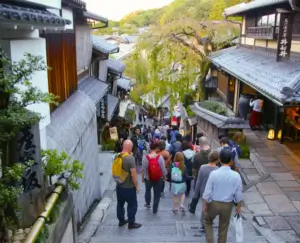
The Historical Alleys of the Higashiyama District
Chawan-zaka, which literally means tea bowl hill, Kiyomizu-zaka, Sannen-zaka, and Ninen-zaka are the main roads, and they’re lined with souvenir stores, cafés, and pottery shops. We go to this area often, and it’s always tough to keep ourselves from buying just one more teapot.
Where to Buy Kyo-yaki
Our favorite shops are spread throughout the area, and there are a ton more that you can discover just wandering around the alleys. So definitely explore and discover while you’re there.
Seigado Toen has been on Kiyomizu-zaka since 1932, and they actually manufacture and wholesale their own Kiyomizu-yaki. It’s recommended if you want to buy directly from people still making the stuff rather than a reseller.
Asahi Toan is part of Asahido, a Kiyomizu-yaki company that’s been in business since 1870. They’ve even been designated as an official purveyor to the Imperial Household. The shop itself skews modern, but it’s a nice contrast if you want something fresher and less traditional.
Shoindo is the oldest on our list. They began near the end of the Edo Period, in 1855, and I’m not sure if they’ve ever renovated the place. The old charm isn’t the only thing that keeps us coming back, though. The shop has a great selection of teapots, teacups, and chawan.
Japanese Knives
If you like to cook, or you know someone who does, this is the one purchase on this list that I’d call a must.
Most high-end Western knives are hardened to somewhere around 56 to 58 on the Rockwell scale, while Japanese blades routinely run 60 to 65. That extra strength allows a Japanese knife to be sharpened to a thinner edge.
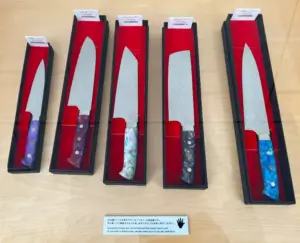
Beautiful Japanese Knives
Many of the knife-making families in Japan started out forging katana samurai swords. They only switched to kitchen cutlery after the Meiji Restoration in 1868, when the government banned carrying swords and the demand for katana dried up overnight.
Where to Buy Japanese Knives
Kikuichi has a history of 750 years, and one of the swords they forged back in the Kamakura period is now a Japanese National Treasure. You can still see the same forging techniques today, just applied to a chef’s knife instead of a katana. If you purchase a knife from their Nara shop, they’ll match your name with Japanese characters and engrave it, by hand, onto your knife.
Aritsugu started out in 1560 as a swordsmith for the Imperial Court, and the shop has been sitting inside Nishiki Market, Kyoto’s famous covered food market, since 1781. It’s one of the oldest knife makers in Japan, and they’re known for sharpening and repairing anything you buy from them for as long as you own it.
Kama-Asa opened in 1908 in Kappabashi, the kitchenware district of Asakusa, and is now run by the fourth generation of the same family. They carry more than 1,000 knives from blacksmiths all over Japan, and true to their philosophy, they never put their name on a blade, only the maker’s mark. Engraving is free here also.
Woodblock Prints
If you love the classic style of Japanese woodblock art, like Hokusai’s The Great Wave, there are two ways you can bring home your very own print.
Authentic Modern Prints
Your best bet is a modern reproduction pulled from the original woodblocks. The Adachi Institute of Woodcut Prints in Tokyo has reproduced more than 1,200 masterpieces by artists like Hokusai and Utamaro, using the exact same hand-carving and hand-printing methods that were used in the Edo period.
These aren’t cheap, machine-printed posters. They’re hand-carved woodblocks from cherry wood and printed with natural pigments and handmade paper, just like the originals were.
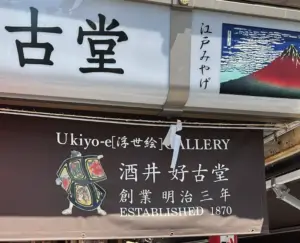
Authentic Woodblock Shop in Asakusa
Antique Prints
Then there are the real antiques, prints that were actually made during the Edo or Meiji periods. These are the real deal, but they come with a price tag to match.
Do your homework before you buy one, because the terms original and reprint get used loosely. Basically, if someone is selling you a rare original Hiroshige for $50, it might be best to walk away.
Where to Buy Woodblock Prints
Sakai Koukodou Yamato sells newly pressed authentic prints, not cheap machine prints. They have a shop right on Nakamise-dori as you make your way to Sensoji Temple. The tiny family-run shop is packed floor to ceiling with woodblock prints and has been in business for more than 150 years.
Nishiharu is a woodblock print shop that’s been sitting on the corner of Teramachi and Sanjo-dori since the early 1900s. The shop carries prints from the Edo and Meiji periods through the Taisho and Showa era. If you’re in Kyoto, this one’s worth the stop.
Chopsticks
Chopsticks make one of the easiest souvenirs to bring home from Japan. They’re small and light, and they pack flat. Just be sure to skip the cheap, plastic knock-offs and find authentic, wood-lacquered chopsticks for a truly authentic gift.
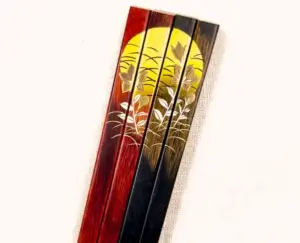
Kyo-nuri Kyoto Lacquer Chopsticks
The lacquer technique used on Kyoto chopsticks goes back to the 700s, when Japan picked up the basics from Tang Dynasty China. Today you’ll find local artisans that have dedicated their lives to keeping this thousand-year-old craft alive.
Yes, they’ll be a bit pricier than the dishwasher-safe plastic knock-offs you’ll find at the tourist shops. But these handmade chopsticks are a relatively inexpensive way to take home real Japanese lacquerware.
Where to Buy Chopsticks
Our favorite shop is Hashiya Kaede. They specialize in Kyo-nuri, Kyoto-style lacquer, finished with omaki-e, a technique where gold or silver powder is sprinkled into the wet lacquer to build the design. They’re made of real wood and lacquer, not plastic dressed up to look nice.
Shibori
Shibori is a method of dyeing fabric using traditional Japanese techniques of folding, twisting, and binding before applying dye. It’s like a much older, far more refined type of tie-dye.
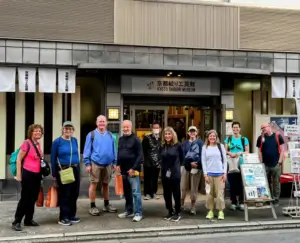
Japan and More Tour Group Outside Kyoto Shibori Museum
Shibori Museum
The Kyoto Shibori Museum is a great place to see this craft up close. You can learn about the dyeing process, view large exhibited works, and even take a hands-on class to make your own scarf. The shibori scarf-making class is always a hit with our tour groups.
Kyo-kanoko Shibori is Kyoto’s version of the craft. The pieces are made entirely by hand, one tiny knot at a time. The process is so slow that a kimono made using this technique can take two or more years to finish.
The craft of shibori is fading fast. So fast that it could realistically disappear within another generation or two. Fewer people are willing to spend a year or more tying knots by hand.
Where to Buy Shibori
Once you’ve toured the exhibits at the Shibori Museum, be sure to visit the shop on the second floor. They sell shibori scarves, bags, and other pieces made by the museum’s own craftsmen. It’s a small space, so be sure to take your time and really study the detail in each piece.
Tenugui
A tenugui is a thin cotton cloth, traditionally used as a hand towel, but they’re beautifully dyed and printed. I think they’re too nice looking to be used as a hand towel.

Becki and Our Framed Tenugui
They can be hung on the wall, either with tapestry rods or framed, or used as a small table runner.
Where to Buy Tenugui
Eirakuya has been in business since 1615. They’re one of the oldest cotton merchants in the country and are currently being run by the 14th generation of the same family. Their main shop in Kyoto is also a museum that shows tenugui designs dating back to the Meiji and early Showa periods. It’s a great way to see how the designs have changed over the last 100-plus years.
Lacquerware
Lacquerware, or shikki, is wood coated with layers of hand-applied lacquer. A well-made and maintained piece of genuine lacquerware will easily last generations.
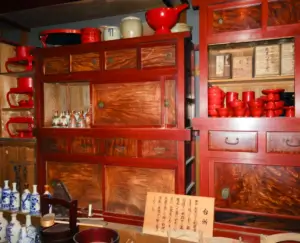
Lacquerware on Display at Chaya Museum
Where to Buy Lacquerware
Ihara is a family-run shop on Nakamachi Street in Matsumoto, Japan. The shop first opened in 1907 and is now run by the fourth generation. They carry the local Kiso lacquerware along with pieces from Yamanaka, Aizu, and Echizen at prices that are far lower than in Tokyo or Kyoto.
Eyeglasses
I know this one sounds like an odd thing to put on a shopping list, but hear me out. Japan is genuinely one of the best places in the world to buy a new pair of eyeglasses.
You can buy a pair of eyeglasses, with frame and lenses included, starting at around 5,500 yen. That’s the total price, not each.
Not only that, your eye exam is totally free. You can walk in, tell the staff you’d like an eye exam, and they’ll test your vision on the spot at no extra charge. Most locations will have your new glasses ready within an hour.
Where to Buy Eyeglasses
Jins and Zoff are two of the biggest names for eyeglasses in Japan. You’ll find their stores in just about every major shopping area. Both are affordable, fast, and reliable, and both can handle foreign visitors who don’t speak Japanese.
Castle & Train Stamps
Here’s a fun one that most first-time visitors don’t know about. Many Japanese castles and train stations offer commemorative rubber stamps for visitors to collect.
All you need to do is pick up a notebook of some sort and collect the stamps on your way across the country. It’s free, it’s fun for kids and adults alike, and by the end of your trip, you’ll have a genuinely unique record of everywhere you went.
Goshuin
A goshuin is handwritten calligraphy in black ink and the red seal of the temple or shrine. They usually cost somewhere between 500 and 800 yen, and each shrine or temple’s design is completely unique.
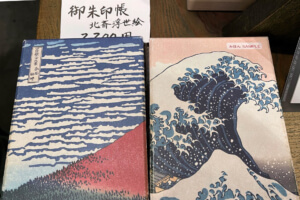
Goshuincho with Woodblock Print Covers
Must Use a Goshuincho
Unlike the castle and train stamps, you can’t just collect these in any notebook. You need a dedicated book called a goshuincho. Goshuincho are made specifically for this purpose, and it’s considered disrespectful to use them for anything else.
Where to Buy a Goshuincho
A goshuincho can be picked up at most temple or shrine offices, in a shop near the temple or shrine, or at a bookstore before you go.
Takeaway
Buying souvenirs in Japan isn’t about quantity. In my opinion, it’s more about finding something that is made by an artisan, using skills that have been unchanged for centuries. On our small group tours, we love helping our guests find quality souvenirs that come directly from the people who make them.
Get a Deeper Look at Japan
Join one of our exclusive Small Group Tours for a trip that goes beyond the typical tourist experience.
 ©JAPANandmore.com
 @JAPANandmore
 JNTO
JNTO ©JAPAN and more
 @JAPANandmore

 ©JAPANandmore.com