Book Confidently with our Flexible Booking Policy. LEARN MORE
Book Confidently with our Flexible Booking Policy.

LEARN MORE

JAPAN and more
  • Japan Tours
  • Services
  • CONTACT
  • Click to open the search input field Click to open the search input field Search
  • Menu Menu
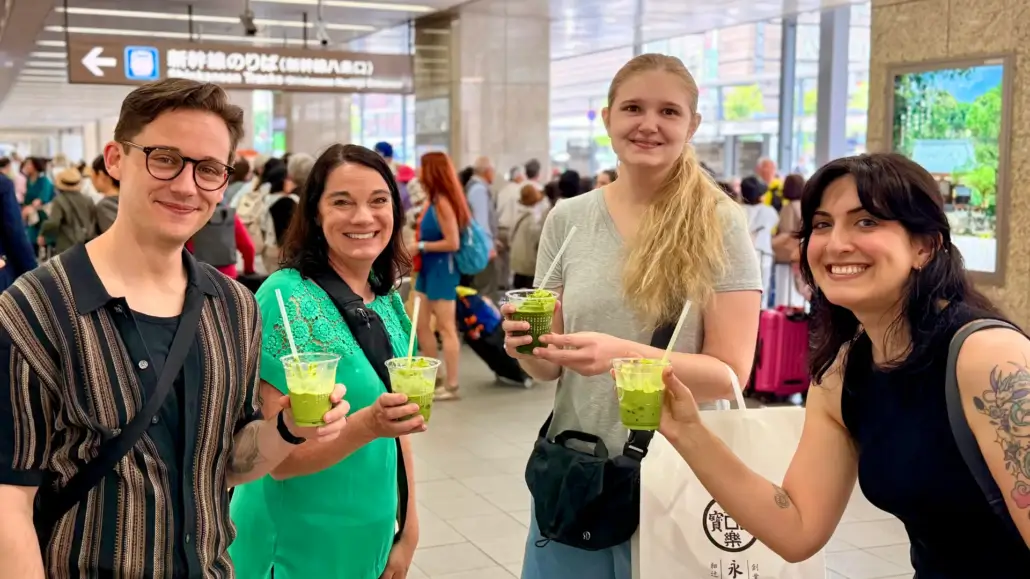
Green Teas at Kyoto Station©JAPANandmore.com

5 Simple Reasons to Avoid To-Go Drinks in Japan

August 1, 2026/in Practical Tips/by Shawn Weldon

Dealing with to-go drinks in Japan takes some getting used to, especially when you realize there aren’t many trash cans on the street. You’ll quickly notice how easy it is to buy a delicious iced matcha latte from all the local cafés. But don’t fall into the trap of grabbing a paper or plastic cup to sip while you explore.

CONTENTS

The Reality of To-Go Drinks in Japan

Before we dive into why this is an issue, let me just say that I love Japanese cafés. We’ve spent countless hours enjoying local coffee shops across Japan, but we always finish our drinks in, or near, the store.

When I talk about to-go drinks in Japan, I’m specifically referring to takeout paper cups, plastic cups, and open soda cans. These drinks can easily spill when shaken, bumped, or squeezed in a crowd.

On the other hand, plastic bottles or reusable bottles with tight, secure screw-on caps are totally fine to carry in your hand or backpack. You can seal a screw-top bottle completely without worrying about messy spills.

Enjoying an espresso at my favorite Fuji view café

Enjoying an espresso at my favorite Fuji view café.

If you’re used to always getting a drink to go when you’re back home, Japan will give you a quick reality check. I’ve been living and traveling throughout Japan since 1998, and I can tell you that local customs surrounding takeout beverages catch most tourists off guard.

The practice of walking while consuming food or beverages is known as tabearuki. While it might seem harmless, carrying open to-go drinks in Japan is widely viewed as poor manners and a public nuisance.

Here are the 5 major reasons why you should finish your drink and ditch the paper or plastic cup before moving on.

1. You Can’t Take Open Drinks Into Stores

Most retail stores, boutique shops, and department stores in Japan strictly prohibit outside food and beverages. Japanese business owners take immense pride in keeping their shops spotlessly clean.

If you walk into a shop holding a cup or open can, the staff will most likely ask you to leave. This actually happened to us while we were with one of our groups in the Higashiyama District in Kyoto.
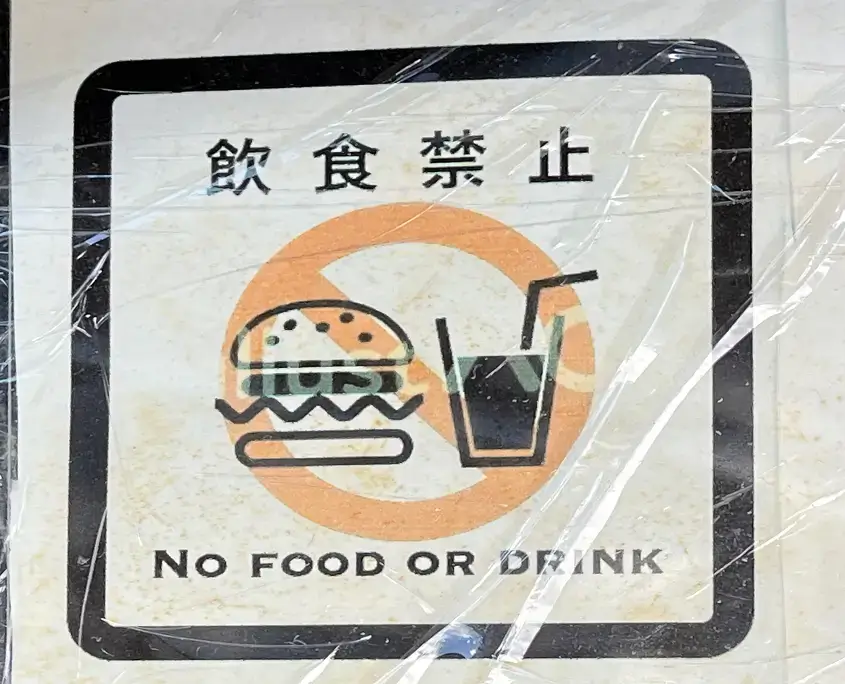
No Food or Drink in Store

Sign telling customers that eating and drinking aren’t allowed.

A guest on one of our tours bought an iced green tea and popped into a local pottery shop. The moment she stepped inside, the shopkeeper jumped right up, crossed his arms to make an “X,” and blurted out, “No, no!”

He pointed straight at his no food or drink sign and motioned for her to wait outside. Naturally, she was pretty rattled by the whole confrontation because it felt so harsh in the moment.

When we talked about it afterward, we realized he just didn’t speak enough English to explain the rule politely. He wasn’t trying to be mean. He was just protecting his shop.

TIP: Look for small stickers near entrance doors that show a cup with a red line through it. Even without a sign, assume open containers are banned inside retail spaces.

It’s also important to remember that local shopkeepers are constantly repeating these same basic rules to hundreds of tourists every single day.

Even if you politely apologize and put your cup away, the next group off the plane from overseas won’t know the etiquette. The shopkeeper finds himself stuck playing hall monitor on repeat, which naturally leads to frustration.

If a staff member seems a bit abrupt with you when you walk in holding an open cup, don’t take it personally. They’re probably just exhausted from dealing with the exact same situation all day long.

2. There Aren’t Many Places to Throw Away Your Cup

Finding a trash can on the streets of Tokyo, Nagoya, Osaka, Kyoto, or just about anywhere in Japan is nearly impossible. Public trash bins were removed across the country following the 1995 Tokyo subway attacks for public safety reasons.

The bins you see next to vending machines are meant for aluminum cans, glass bottles, and plastic PET bottles only. Although the round opening is very inviting, they aren’t for to-go coffee or tea cups.
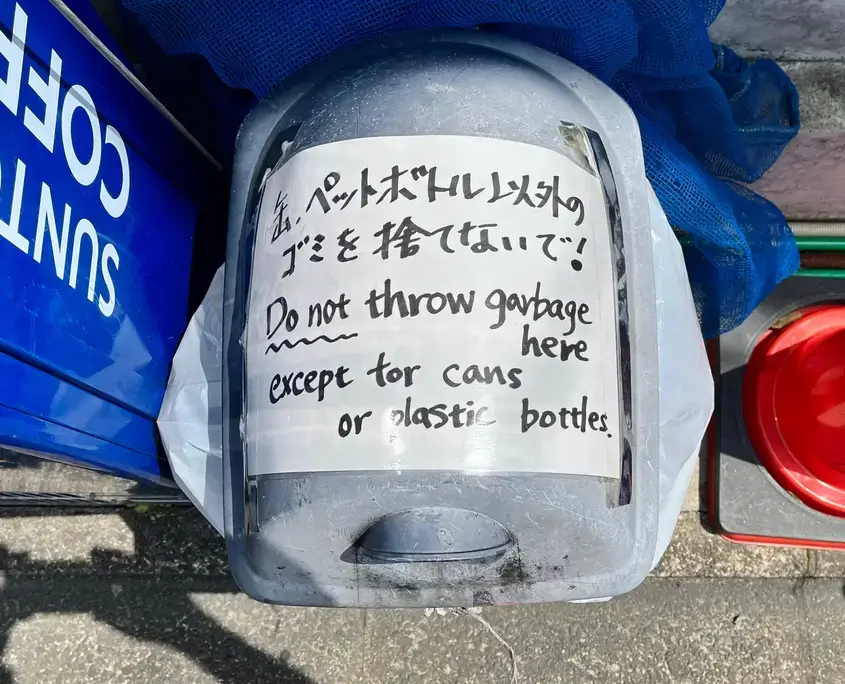
Recycle bin next to a vending machine

Recycle bin next to a vending machine.

TIP: Never jam your cup into a vending machine recycling bin or leave it on top of a vending machine, on a railing, on a shelf at a temple or shrine, or any place that isn’t specifically for trash. Locals view this as blatant littering, which means someone else has to clean up the mess.

If you buy a to-go drink in Japan, be ready to carry that sticky, empty cup for hours. And I can tell you from experience, carrying an empty cup around all day gets old very fast.
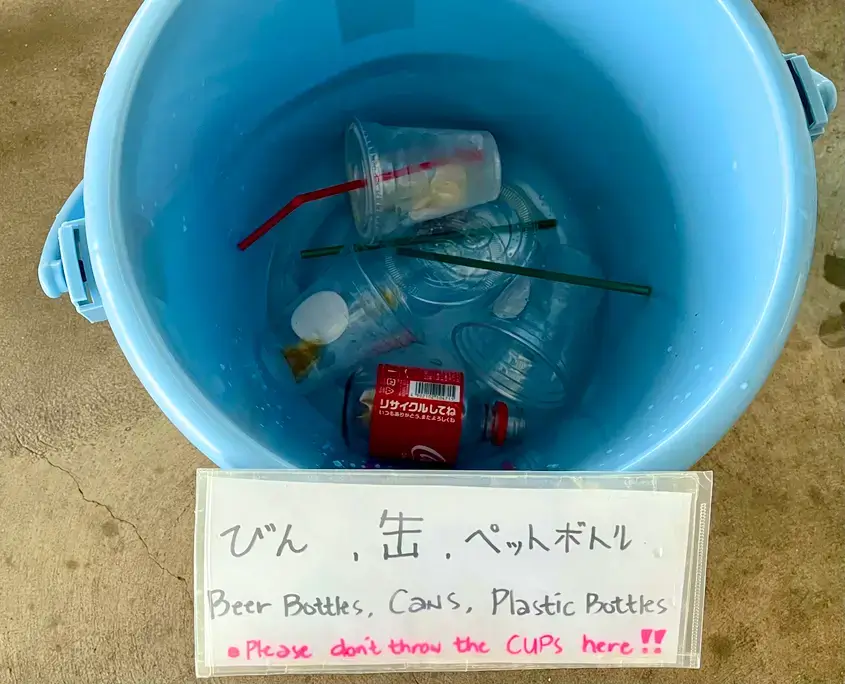
Sign on trash can asking customers to not throw cups away in the bin

Sign on trash can asking customers to not throw cups away in the bin.

You may be asking yourself, what do Japanese people do? Well, they simply carry their trash home with them. One suggestion we make to our guests on our small group tours is to keep a small plastic bag with you for any trash you may accumulate during the day.

3. It’s Easy to Spill on Public Transportation

Public transit in Japan is world-famous for being clean, quiet, and efficient. Local trains and subways packed with daily commuters aren’t designed for open beverages.

While it’s completely acceptable to eat an ekiben or drink a coffee on long-distance trains and on the Shinkansen bullet trains, local commuter lines are a different story.

Commuter trains aren’t designed for people to eat or drink, and they get packed during morning and evening rush hours. People are squeezed together shoulder-to-shoulder, so spilling your drink is very likely.

Transit Type Are open drinks ALLOWED? Recommended Etiquette
Local Subways & Commuter Trains No Don’t consume open drinks. Plastic PET bottles or reusable bottles that screw shut are okay.
Shinkansen (Bullet Train) Yes All forms of drinks are totally fine.
City Buses No Avoid drinking open beverages while in motion; stick to sealable bottles if needed.

It’s also best to not consume to-go drinks on commuter trains and subways because these trains may stop suddenly, making spills even more likely. However, plastic PET bottles or reusable bottles that screw shut are okay.

TIP: If there’s a tray, it’s okay! On long-distance trains and the Shinkansen bullet trains, eating and drinking at your seat is completely acceptable because every seat has a fold-down tray table.

4. You Might Bump Into Someone and Spill

City sidewalks in tourist hubs like Dotonbori in Osaka or the Higashiyama District of Kyoto get packed. Navigating these dense pedestrian areas while holding an open to-go drink is an absolute nightmare.
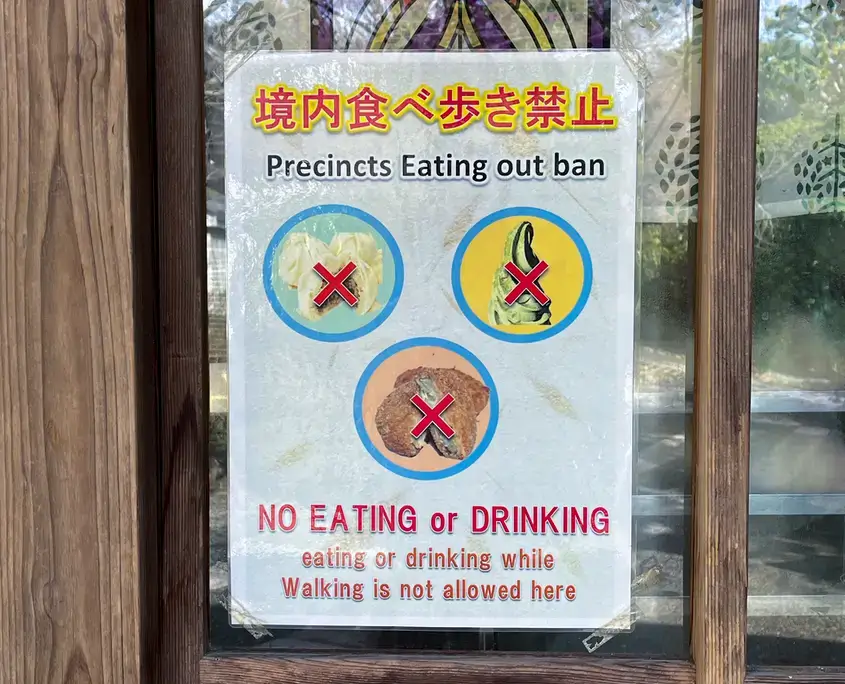
Sign telling people not to eat or drink while walking

Sign telling people not to eat or drink while walking.

The coastal city of Kamakura recently passed official public guidelines asking tourists to stop walking while consuming items on crowded streets. Spilling your drink onto someone in a packed crowd is considered a major social faux pas in any culture.

If you really need a drink, take a seat, or just stand right outside the store where you bought it. Finish your drink, toss the cup in their trash bin, and then get back to sightseeing.

5. You Can’t Take Outside Food and Drink Into Restaurants

It’s standard etiquette across Japan that outside food and drinks are strictly banned inside dining establishments. This rule applies to open coffee cups, but it also includes sealed bottles with screw-on caps.

A close Japanese friend of ours owns a Mexican restaurant in Nagoya, and she gave us a great insider perspective on why this rule is taken so seriously.

If you bring an outside drink into her dining room and set it on your table, other diners will naturally assume she sells it. When those customers try to order the exact same drink, it puts her in the very awkward position of having to explain that they don’t serve it. In a service culture built on avoiding confusion and public discomfort, that is a major faux pas.
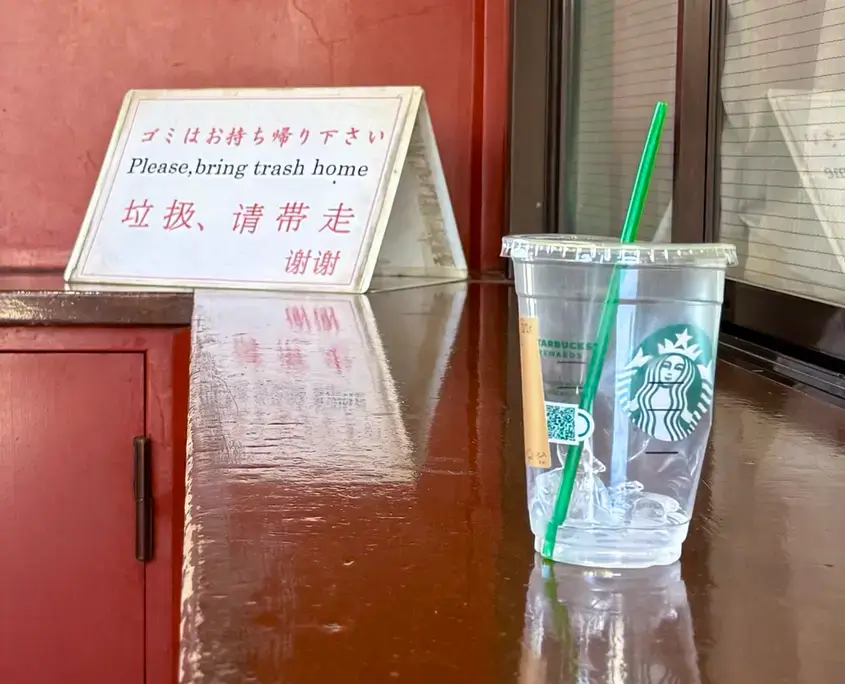
Plastic cup left at Sensoji Temple next to sign

Plastic cup left at Sensoji Temple next to a sign asking visitors to take trash with them.

If you walk into a restaurant carrying an outside drink, the staff may ask you to put it away or leave it outside. If you have a screw-top water bottle, tuck it inside your backpack before sitting down. If you have a cup or can, you’ll have to gulp it down on the curb before stepping inside.

What Should You Do Instead?

You don’t have to give up your morning espresso or afternoon iced tea. You just need to adjust your routine to match Japanese etiquette. Here is how you can enjoy to-go drinks in Japan without running into trouble.

Drink Near the Point of Purchase

When you buy a coffee from a café or a coffee stand, the rule of thumb is to consume it right where you bought it. Most vendors will have some seats, a small bench off to the side, or a standing area.

Sit or step off to the side, enjoy your drink, and then hand the empty cup back to the staff at the shop you purchased the drink from. They will happily take the trash off your hands and toss it into their bin.

TIP: It’s considered ill-mannered to hand a shopkeeper trash that you bought from another shop. If you can’t find a bin, you can always double back to the original shop where you bought your drink and let them dispose of it. Otherwise, just tuck it into your plastic bag and throw it away once you get back to your hotel.

Carry a Small Plastic Bag for Trash

Because public garbage cans are virtually non-existent on city streets, Becki and I always pack a couple of small plastic bags in our backpack. If you forget, you can stop at a convenience store and pick one up for less than 10 cents.

If you find yourself with an empty container and no bin in sight, drop it inside your plastic bag and tie it tight to prevent any leftover liquid from leaking into your backpack. Then you can safely carry it with you until you get back to your hotel room or find an appropriate trash bin.

TIP: Keep a small package of wet wipes or alcohol towelettes in your backpack also. If you get any drink residue on your hands while holding an empty cup, you’ll be glad you brought them!

Mindful Travel Means a Better Vacation

Traveling throughout Japan is one of the most rewarding experiences you’ll ever have, but the key to being an invisible tourist is respecting how the local culture operates. Following the norms around to-go drinks in Japan comes down to respect, cleanliness, and public consideration.

Get a Deeper Look at Japan

Join one of our exclusive Small Group Tours for a trip that goes beyond the typical tourist experience.

Get Details
Share this entry
  • Facebook Facebook Share on Facebook
  • X-twitter X-twitter Share on X
  • Linkedin Linkedin Share on LinkedIn
  • Reddit Reddit Share on Reddit
  • Mail Mail Share by Mail
https://japanandmore.com/wp-content/uploads/2026/07/GreenTeasAtKyotoStation.webp 1080 1920 Shawn Weldon https://japanandmore.com/wp-content/uploads/2016/12/Japanandmoresmallheader-4.png Shawn Weldon2026-08-01 15:54:202026-08-01 15:54:205 Simple Reasons to Avoid To-Go Drinks in Japan
You might also like
Okayama Saidai-ji Eyo Naked Festival 2017 Okayama Naked Festival 2017
Japanese Green TeaShutterstock Japanese Green Tea: Beginner’s Guide
Selfie at Himeji Castle©JAPAN and more Cell Phone Etiquette in Japan
Is There a Lot of Walking in Japan?@JAPANandmore Is There a Lot of Walking in Japan?
Gion No Entry Sign©JAPANanmore.com Gion Tourist Ban: What You Need to Know
Japanese Vending MachinePixabay 5 Things You Won’t Find in Japan

Recent Posts

  • 5 Simple Reasons to Avoid To-Go Drinks in Japan
  • The Ultimate Guide to Ghibli Park
  • Grand Sumo Tournament on NHK World
  • Japanese Kimono Trend: Why Tourists in Kimono Are Not Geisha
  • Chopsticks in Japan: 9 Taboos to Avoid

ABOUT

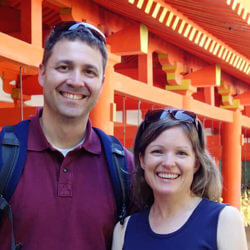
Bex and Shawn in Nara

Becki & Shawn
Japan Travel Specialists

Hi, we’re Becki and Shawn! We love Japan and are truly passionate about Japan and Japan travel.

We’ve lived, worked, and traveled in Japan for 20+ years, so we know where to go, what to see, and how to get there. Join us in Japan for an adventure of a lifetime!

SEE OUR JAPAN TOURS

Travel Japan Like a Pro

Get a FREE Checklist to help you plan your trip.
Plus, get email updates with Japan Travel Tips.

"*" indicates required fields

This field is for validation purposes and should be left unchanged.
jrpass
Learn Japanese with JapanesePod101.com

Becki & Shawn in Nara, Japan

Becki and Shawn
Japan Travel Specialists

Hi, we’re Becki and Shawn! We love Japan and are truly passionate about Japan and Japan travel.

We’ve lived, worked, and traveled in Japan for 20+ years, so we know where to go, what to see, and how to get there. Join us in Japan for an adventure of a lifetime!

Accreditations

Japan Travel Specialist Advanced Certificate
ARC Verified Travel Consultant Certification
State of California Seller of Travel Certificate of Registration
JATA Membership Certification

SERVICES

  • Japan Tours
  • Services
  • About
  • Contact
  • Partners

JAPAN INFO

  • Destinations
  • Experiences
  • Travel Tips
  • Blog

Reviews & Recommendations

See our TripAdvisor Reviews
See our Google Reviews
See our Facebook Reviews
Copyright - © 2016 - 2026,  JAPAN and more  |  Privacy Policy  |  Disclosure  |  Website Services by Weldon Websites
  • Link to Facebook
  • Link to X
  • Link to Instagram
  • Link to Youtube
  • Link to LinkedIn
  • Link to Mail
Link to: The Ultimate Guide to Ghibli Park Link to: The Ultimate Guide to Ghibli Park The Ultimate Guide to Ghibli ParkThe Valley of Witches©JAPANandmore.com Link to: Lake Shikotsu Ice Festival Link to: Lake Shikotsu Ice Festival Lake Shikotsu Ice FestivalLake Shikotsu Ice Festival
Scroll to top Scroll to top Scroll to top

This site uses cookies. By continuing to browse the site, you are agreeing to our use of cookies.

Accept

Cookie and Privacy Settings


How we use cookies

We may request cookies to be set on your device. We use cookies to let us know when you visit our websites, how you interact with us, to enrich your user experience, and to customize your relationship with our website.

Click on the different category headings to find out more. You can also change some of your preferences. Note that blocking some types of cookies may impact your experience on our websites and the services we are able to offer.

Essential Website Cookies

These cookies are strictly necessary to provide you with services available through our website and to use some of its features.

Because these cookies are strictly necessary to deliver the website, refusing them will have impact how our site functions. You always can block or delete cookies by changing your browser settings and force blocking all cookies on this website. But this will always prompt you to accept/refuse cookies when revisiting our site.

We fully respect if you want to refuse cookies but to avoid asking you again and again kindly allow us to store a cookie for that. You are free to opt out any time or opt in for other cookies to get a better experience. If you refuse cookies we will remove all set cookies in our domain.

We provide you with a list of stored cookies on your computer in our domain so you can check what we stored. Due to security reasons we are not able to show or modify cookies from other domains. You can check these in your browser security settings.

Other external services

We also use different external services like Google Webfonts, Google Maps, and external Video providers. Since these providers may collect personal data like your IP address we allow you to block them here. Please be aware that this might heavily reduce the functionality and appearance of our site. Changes will take effect once you reload the page.

Google Webfont Settings:

Google Map Settings:

Google reCaptcha Settings:

Vimeo and Youtube video embeds:

Privacy Policy

You can read about our cookies and privacy settings in detail on our Privacy Policy Page.

Privacy Policy
Accept

Travel Japan Like a Pro

Get our FREE Checklist to help you plan your trip.
Plus, get email updates with Japan Travel Tips.

"*" indicates required fields

This field is for validation purposes and should be left unchanged.
No spam, ever. You can unsubscribe any time.

Travel Japan Like a Pro Checlist