10 Things to Know About Eating Out in Japan
You probably already know that eating out in Japan offers some of the best culinary experiences in the world. But what you may not realize is that the dining experience in Japan is slightly different from what you’re used to back home.
CONTENTS
The Power of Specialization
One of the first things you’ll notice about eating out in Japan is that restaurants rarely try to be everything to everyone. In the States, we’re used to restaurants with exhaustive menus that offer burgers, pasta, tacos, salads, vegan food, and chicken nuggets all in one place. But in Japan, specialization is the name of the game.
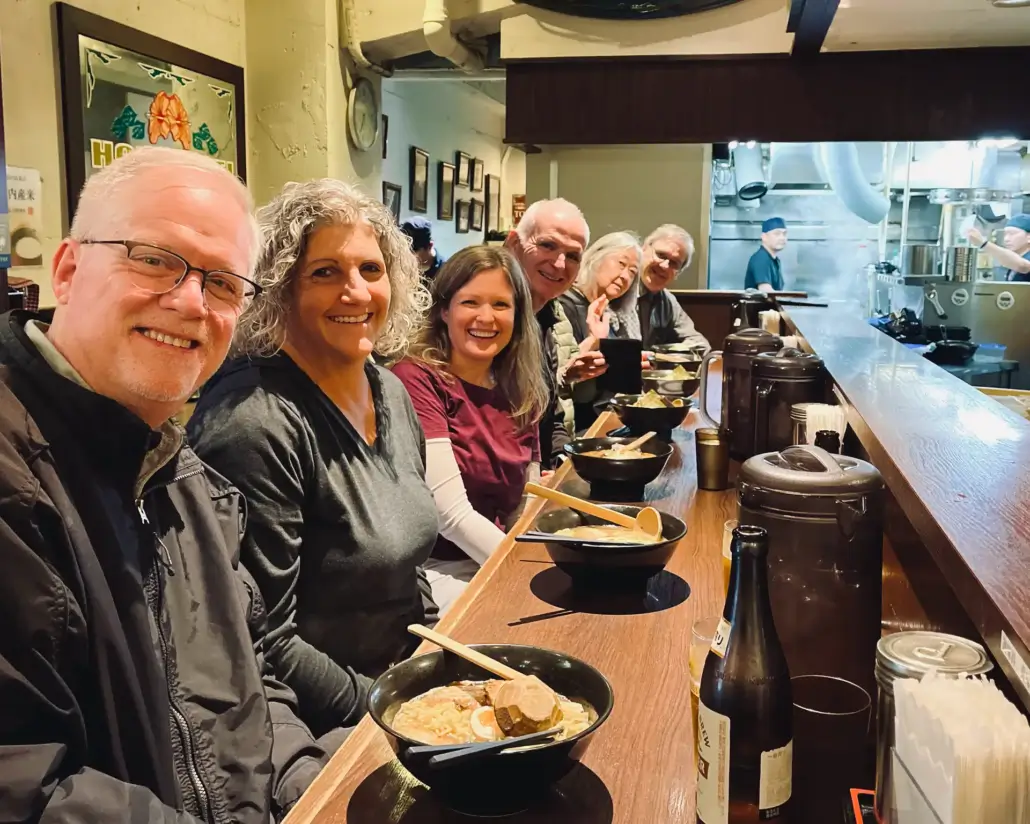
Tour Group at Our Favorite Ramen Shop in Nagoya
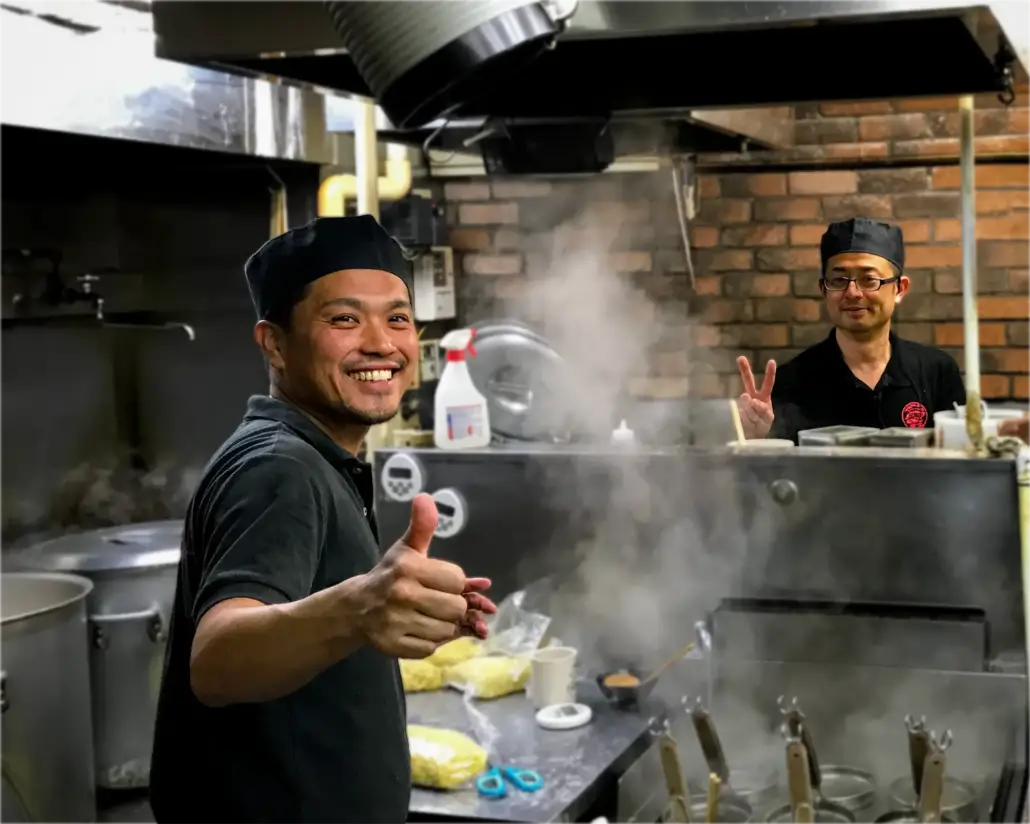
Chef at Our Favorite Ramen Shop in Nagoya
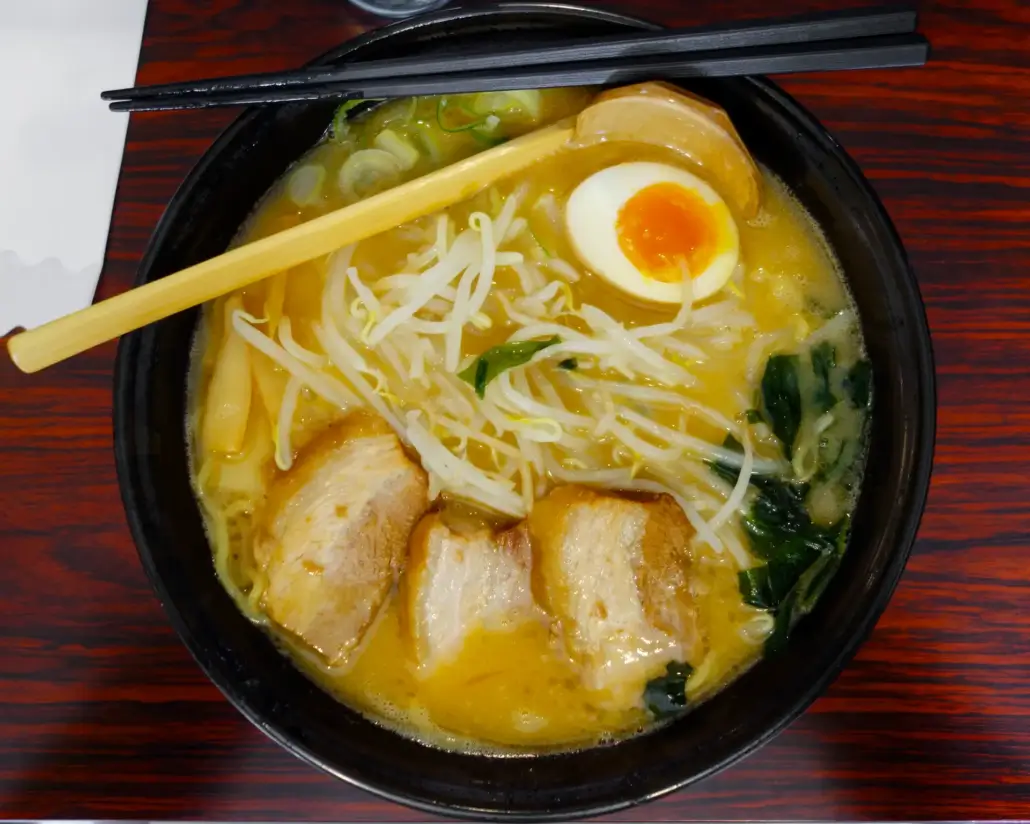
Best Bowl of Ramen
10 Things to Know About Eating Out in Japan
Japanese society is built on a foundation of mutual respect and harmony, and the restaurant scene is no different. The staff works hard to provide a seamless experience, and in return, they expect guests to follow the established systems and etiquette.
In order to help you blend in and look like a veteran, I’ve put together this list of things you may not have known about eating out in Japan.
1. Mastering the Wait
Lines are a way of life in Japan, but how you wait depends on the shop. These are the three most common ways restaurants handle the queue.
The Normal Queue: Stand in a line and wait your turn. Don’t hold a place for more than two people. Your entire group should be there with you to wait in line. If there are ropes or markers on the ground, follow them strictly.
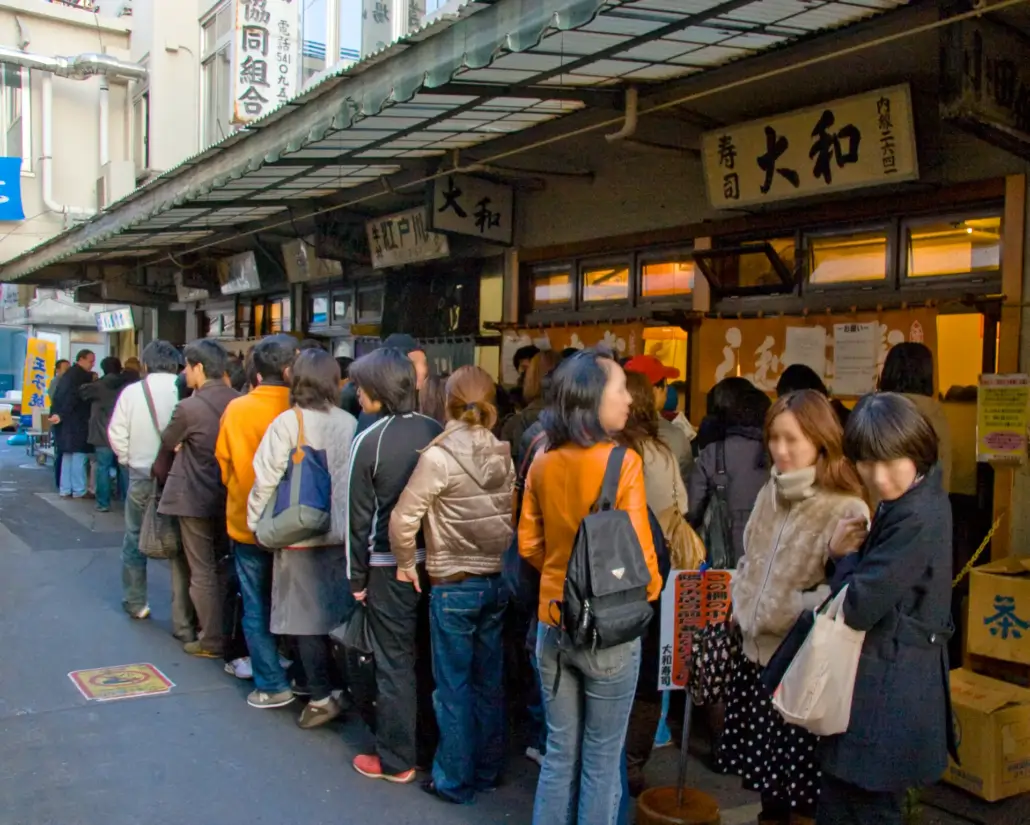
Long Line In Front of Sushi Restaurant | KimonBerlin, CC BY-SA 2.0, via Wikimedia Commons
The Musical Chairs: Some restaurants have a row of seats just outside the shop. The seat closest to the door is usually the next-up position. When that person is called, everyone stands up and moves down one seat to occupy the chair that was just vacated. If you see seats, sit and follow the flow. Standing, rather than sitting, disrupts the flow and causes a bit of confusion.
2. No Outside Food or Drinks
I know this sounds like common sense, but I see tourists walking into restaurants with water bottles, soft drinks, or snacks from convenience stores all the time.
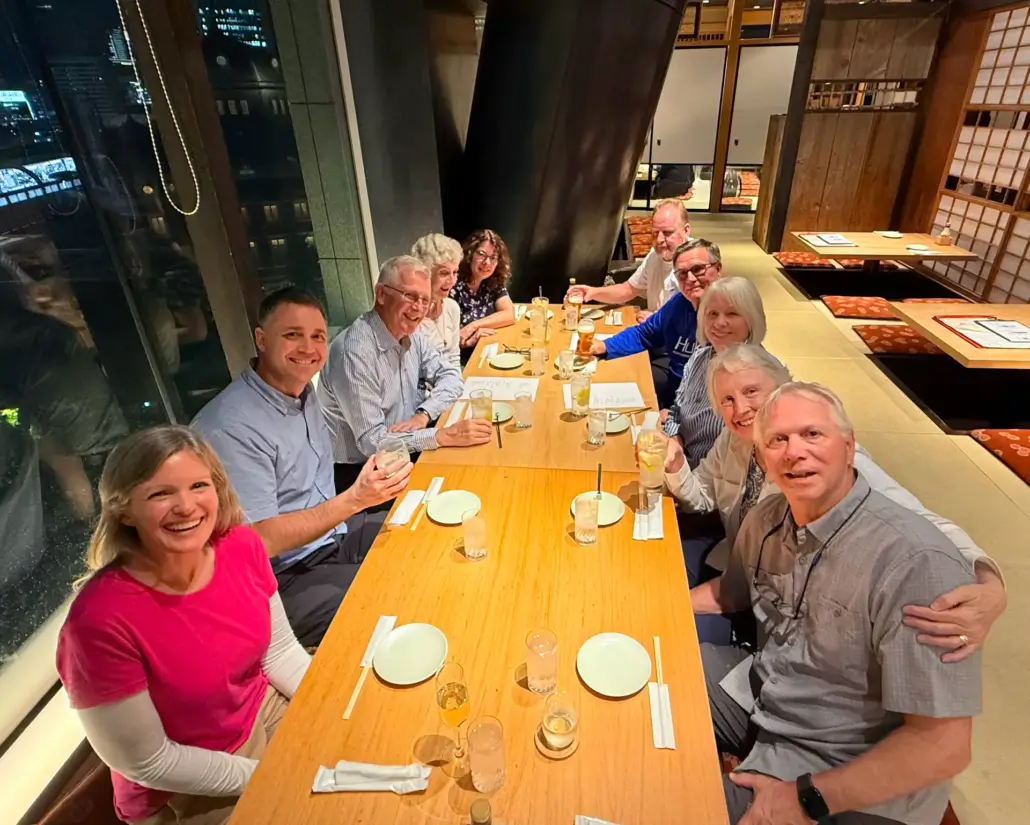
Tour Group at Izakaya in Tokyo, Japan
3. The Strict Reality of Reservations
In Japan, reservations are handled differently than they are back home, and they’re considered a commitment.
Holding the Table: If you make a reservation at a restaurant, there is a good chance that they’ll hold that table for you until you arrive. So if the restaurant opens at 5:30 PM and you’re booked for 7:00 PM, that table might sit empty until you arrive.
The Cost of a No-Show: Because shops are small, a no-show is a financial hit. Restaurants in Japan lose billions of yen annually to no-shows, leading many restaurants to now collect credit card deposits. If you don’t show up, they keep the deposit to cover the lost revenue and the food they pre-prepared for you.
4. One Dish Per Person
It’s best for each person in your group to order their own individual dish. Since most restaurants in Japan are small, having every guest order a dish helps the restaurant stay in business.
As long as everyone orders a dish, sharing bites of each other’s food is perfectly fine. This also gives you, and everyone in your group, the chance to try even more of their delicious food.
5. No Assigned Servers
The greatest part about eating out in Japan is that you’re not assigned a single server. At almost every restaurant, you can place your order, ask for water, or get the bill from any staff member who walks by. There is no designated server system, which leads to much faster service.
6. The No Tipping Rule
The entire time I’ve lived in Japan, tipping has never been customary. It’s become a topic of conversation recently because of the influx of tourists leaving tips at restaurants that aren’t expecting it. This has led to embarrassment, misunderstandings, and confusion on both sides of the table.
No System: Tipping in restaurants in Japan is not, and never has been, customary. The staff at these establishments make an hourly wage that is at least three times better than what restaurants pay servers in the United States.
Since tipping is not the norm, restaurants don’t have systems put into place for distributing tips to their staff. So the money you leave behind most likely just ends up in the restaurant’s purse, rather than with any of the employees who helped you. Also, since there is no assigned server, there really isn’t any one person to tip.
The Backlash: While tip jars are appearing in some tourist areas, many Japanese people are frustrated by the introduction of the tipping culture. They want to keep the tradition of high-quality service as a standard, rather than a favor you have to buy.
The Forgotten Money: If you leave money on the table, the staff will likely chase you down the street thinking you forgot your change. Rarely do they assume you were tipping.
7. The Otoshi (Table Charge)
In some Izakaya, you’ll be served a tiny, unrequested appetizer called Otoshi. This is a mandatory table charge, usually ranging from 300 to 600 yen per person. It’s the Japanese version of a cover charge, and it’s a standard part of the dining culture.
8. Pay at the Register
In Japan, you rarely pay your bill at the table. Instead, look for a small clipboard at your table with an itemized list of everything you ordered or a number. Take that small clipboard to the register near the entrance to pay.
Keep in mind that most shops don’t split checks, so be prepared to have one person pay the full amount at the register. Most Japanese groups will divide the check by the number of people, and everyone gives cash to one person to pay the bill. Otherwise, you can get the menu and pay for what you ordered. Prices on menus include tax, and there is no tipping.
9. Use the Money Tray
When you get to the register, look for a small money tray. Always put your cash or credit card in the tray rather than handing it directly to the cashier. It’s considered more polite and allows the staff to count the money clearly in front of you.
10. Cash is Still King
I don’t care what you’ve read on Reddit or Facebook. Cash is still king. There are a lot of places that only accept cash, and you don’t want to be caught at the register holding an empty wallet.
Of course the big cities like Tokyo, Osaka, and Kyoto are becoming more and more card-friendly. But the temples and shrines that charge fees and many mom-and-pop shops are strictly cash only.
What to Take Away
As long as you’re aware of these cultural differences and make an effort to follow the local systems, you’ll look like a pro. We hope these tips help you enjoy eating out in Japan!
Get a Deeper Look at Japan
Join one of our exclusive Small Group Tours for a trip that goes beyond the typical tourist experience.
 ©JAPANandmore.com
 ©JAPANandmore.com
 ©JAPANandmore.com
 @JAPANandmore
 ©JAPANandmore.com
 Wiki
Wiki

 Generated by Gemini AI