
 ©JAPANandmore.com
The Art of Standing in Line in Japan
Standing in line in Japan properly will save you headaches and ensure you blend right in with the locals. Understanding these unspoken rules is the key to a smooth journey and avoiding the confusion that many first-time travelers face.
CONTENTS
The Art of Standing in Line in Japan
If you’ve taken public transportation in any major city, you know that waiting for a train or a bus can sometimes feel like a free-for-all. When the doors open, there’s often a frantic surge of people trying to get on, sometimes before others get off. It’s stressful, it’s chaotic, and it’s frustrating.
Luckily, you won’t have to deal with that on your trip to Japan. Because standing in line in Japan is something of an art form. Whether it’s for a super trendy ramen shop or the Shinkansen bullet train, the queuing culture in Japan is designed to reduce anxiety and keep everything moving like clockwork.
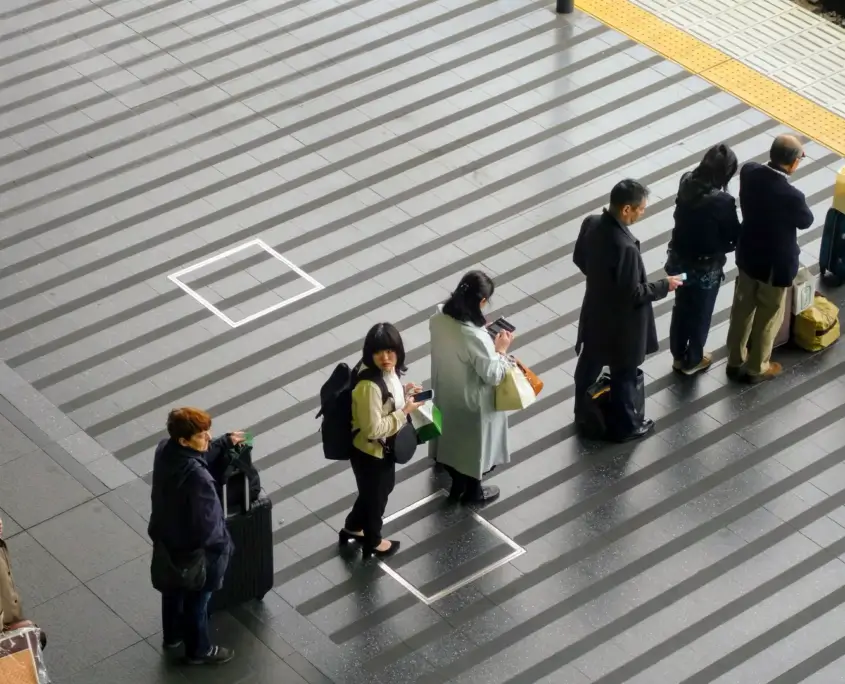
People Queued at Kyoto Station
Why Standing in Line Matters
The queue in Japan is viewed as a social contract. Most people that live in Japan are very aware of how their actions affect the comfort of those around them. By standing in an orderly line, everyone agrees on the fairness of the wait.
When you know exactly where you stand and exactly when it’s your turn, your stress levels drop. You don’t have to worry about someone cutting in front of you or missing your chance to board. It creates a predictable environment that makes public transportation much more enjoyable for everyone.
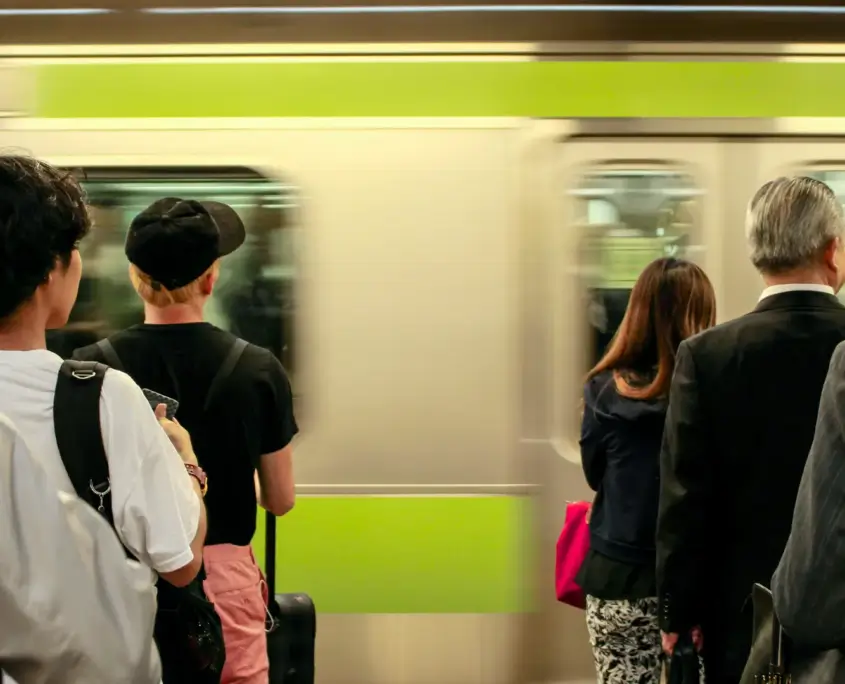
People in Queue for Yamanote Line – Photo by Kassandre Pedro
No Place Holding
A common mistake I see tourists make is having one person line up while the rest of the group goes off to get snacks for the train or explore. While we might see this as saving time, in Japan, it is considered very impolite.
The general rule in Japan is that if you aren’t physically in the line, then you’re not in the line. When a group of people suddenly joins the one person who was holding their spot, it feels like a breach of the social contract for everyone standing behind them.
While the people in the back of the line may have been waiting patiently, they now find themselves pushed further back by people who haven’t put in the time. This also undermines the sense of fairness that makes standing in line in Japan work so well.
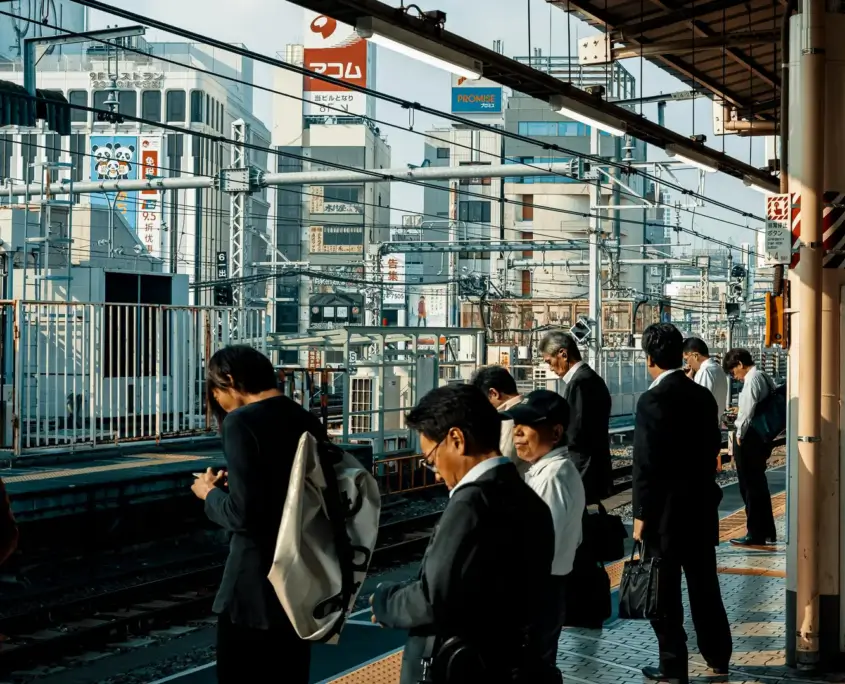
People Waiting on Train Platform in Japan – Photo by Will Wright
Keep in mind that if someone needs to leave for a quick trip to the restroom, that’s okay. But having one person hold a spot for a group is a big no-no and can lead to some very unhappy looks from the locals.
How to Find the Queue
You’ll see markings on the ground on most train platforms. These markings tell you exactly which direction people should line up and where the train doors will open. On some train lines there are two sets of lines. One set for the train currently arriving and another for the train coming after that.
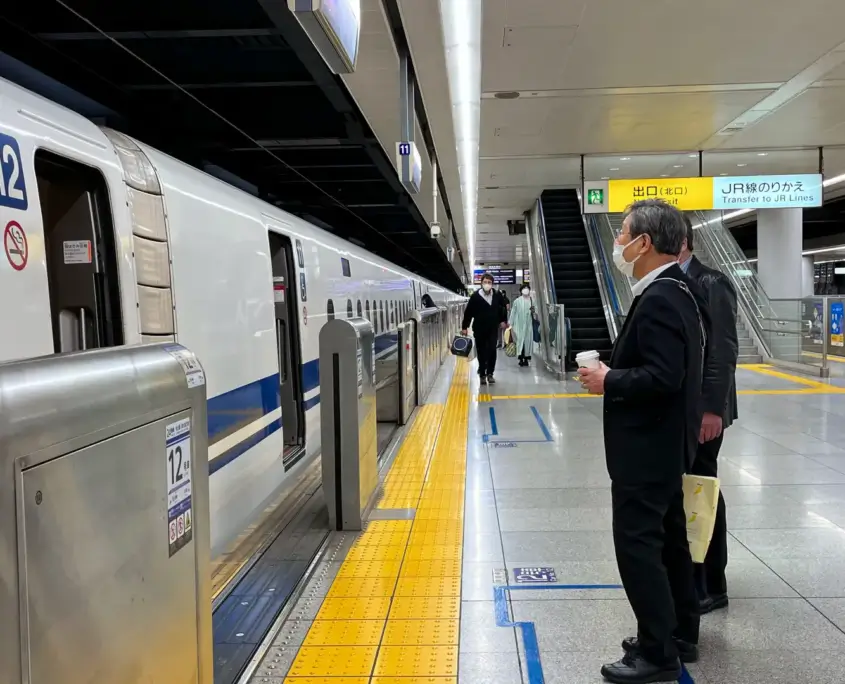
Salarymen Queueing for Next Shinkansen
The Phantom Queue
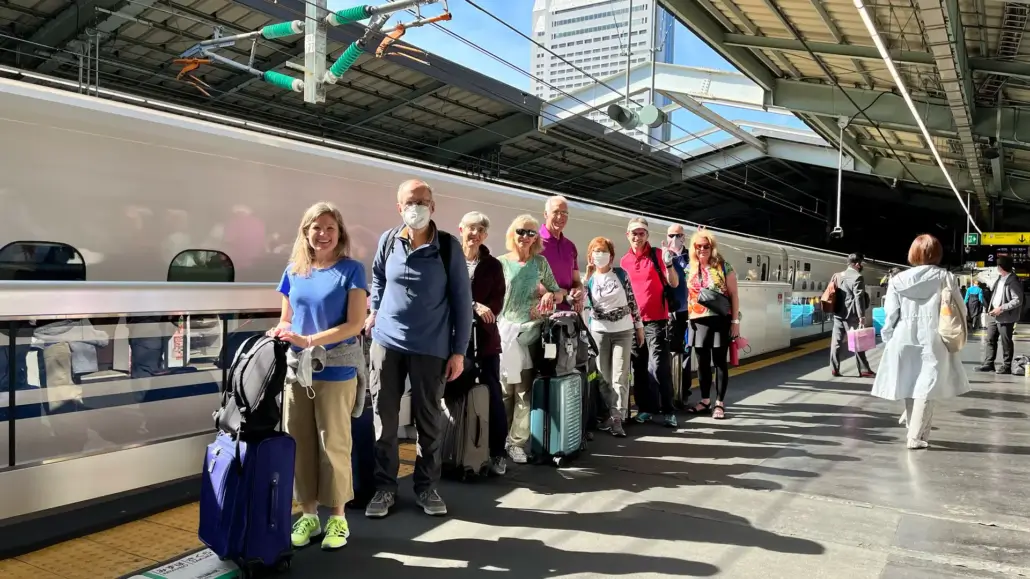
While on a tour this past year, Becki and I were with our group on a Shinkansen platform in Kyoto. The platform was very crowded with several groups of people huddled in conversation.
In the time we were on the platform, two or three trains had come and gone. Our group, along with all the other groups, was waiting in the center of the platform, watching travelers queue up to get on and off trains.
Once our train’s name and number popped up on the board, our group lined up in the designated platform lines on the ground. We queued in a neat, single-file row for our train.
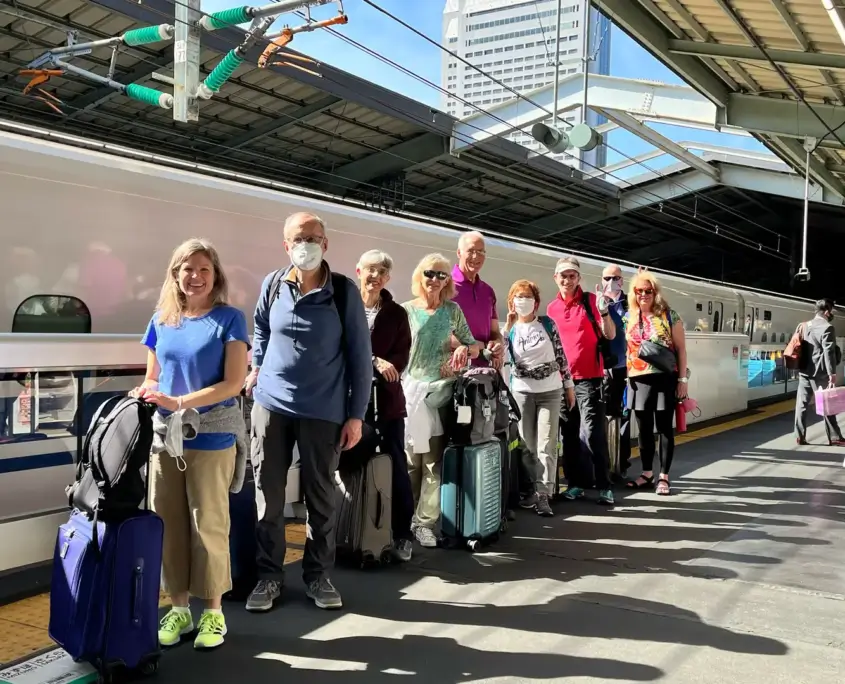
Our Group in Queue for the Shinkansen
Stand in the Line Markings
The point of the story is that it’s impossible for anyone else to know which train you’re waiting for unless you stand in the designated area. In Japan, standing around near an entrance is seen as a lack of intention. Whether you’re waiting for a train, a bus, or a restaurant, you need to commit to the line.
- Check the overhead signs: Make sure the next train is yours. If it is, get in line.
- Find the door number: Your Shinkansen ticket will have a car number (e.g., Car 5). Find the markings on the automatic platform gates that match your car number.
- Line up single-file: Don’t stand in a clump with your friends. Stay within the lines so other passengers know where the line ends or can easily walk past.
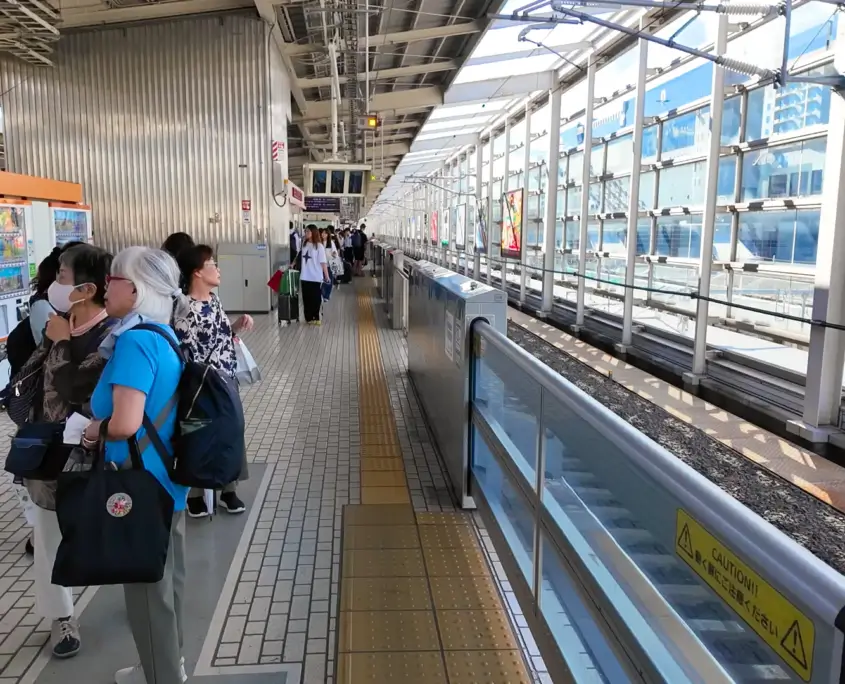
People Waiting Inside Queue Markings
If you huddle in the middle of the platform, you’re essentially invisible to the system. You may have been there for a long time, but if you’re not in the line, you don’t officially have a spot.
The Anxiety-Free Benefit
The reason the queue in Japan is taken so seriously is that it’s supposed to eliminate the human element of conflict. When everyone follows the markings, the conductor knows exactly when the platform is clear, and passengers know exactly where to stand to let people off the train first.
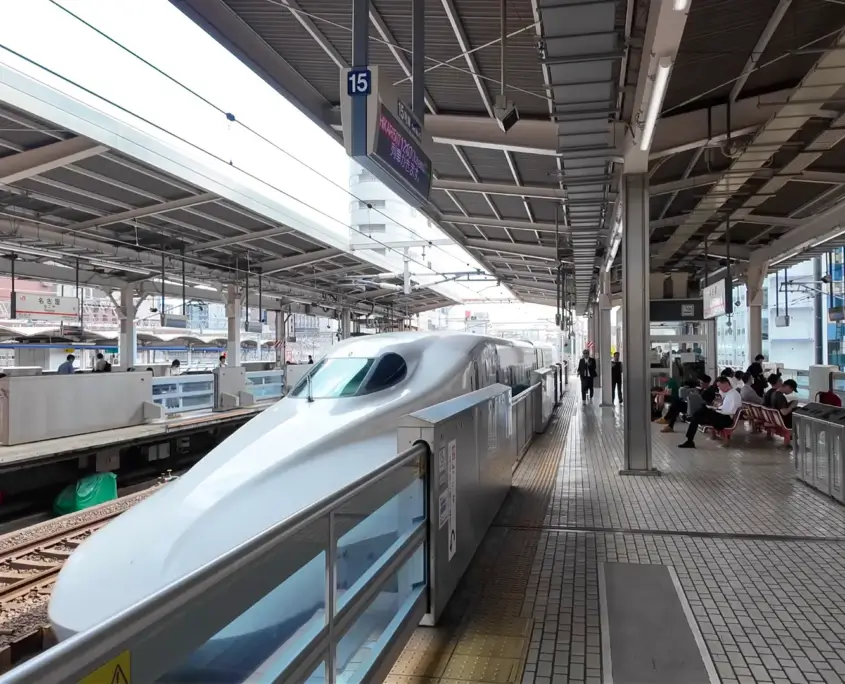
Shinkansen Arriving at Platform
What to Take Away
As I always say, a little bit of effort goes a long way in Japan. By simply looking for those floor markings and standing single-file, you’re showing respect for the local culture and the people around you.
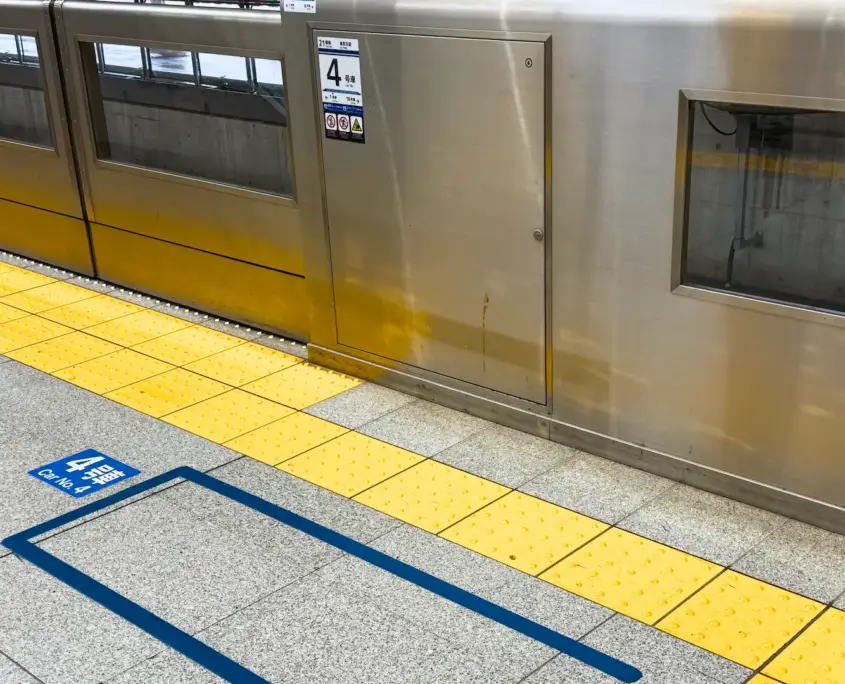
Blue Queueing Area for Car Number 4
Standing in line in Japan will help you be a more conscious traveler and have a more enjoyable journey.
Want a Unique Japan Trip?
Discover Japan planning secrets with our best-selling Itinerary Planning Course. Or inquire about our exclusive Small Group Tours.
 AI Generated
 @JAPANandmore
 @JAPANandmore




 @JAPANandmore
 @JAPANandmore