 ©JAPANandmore.com
Enjoy Cherry Blossoms in Japan Like a Pro
If you’re traveling this spring to enjoy cherry blossoms in Japan, there are a few things we’d like to share with you to help you blend in.
CONTENTS
Enjoy Cherry Blossoms in Japan Like a Pro
While the Japanese blossom season is an unforgettable experience, there is a right way and a wrong way to handle yourself around these trees. If you really want to experience the blossoms while respecting the local traditions, we’ll show you how to be the invisible tourist.
A Brief History of the Sakura
To understand why the rules are so strict, you first have to understand the history. Hanami flower viewing is a practice that goes back to the 700s. It originally began in the Nara Period (710 – 794) with Ume plum blossoms.
It was during the Heian Period (794 – 1185) that Sakura cherry blossoms truly took hold, becoming the favored flower of the imperial court.

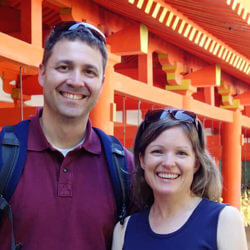
Becki Under a Cherry Blossom Tree at Matsumoto Castle
Japanese culture takes this very seriously, and that’s why these trees are considered national symbols. So, it is considered culturally offensive to damage a cherry tree or the blossoms.
Sakura Are Surprisingly Delicate
The reason for the No Touching policy isn’t just about tradition. Cherry blossom trees are much more delicate than the maples or oaks you might have in your backyard.
Don’t Touch, Shake, or Pull
Capturing the perfect spring memory shouldn’t come at the expense of the trees. One of the most common, yet avoidable, mistakes I see made is people grabbing a branch to pull it into frame.
Cherry blossom wood is incredibly brittle. While a small branch snapping may seem minor, it creates an open wound on the tree. This makes the tree a target for canker diseases and wood-rotting fungi that can kill the entire plant.
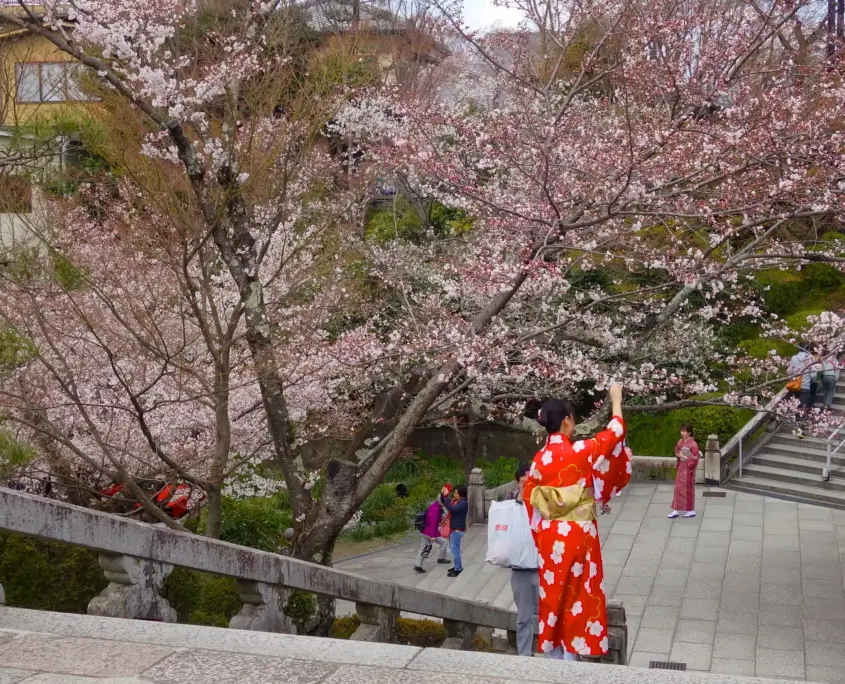
Girl Touching Cherry Blossom Branch
Resist the Urge to Climb
The bark is vital to a cherry tree’s survival because it functions as its circulatory system. Even light pressure from a shoe can interfere with water transport and cause bark scorch and eventually limb death.
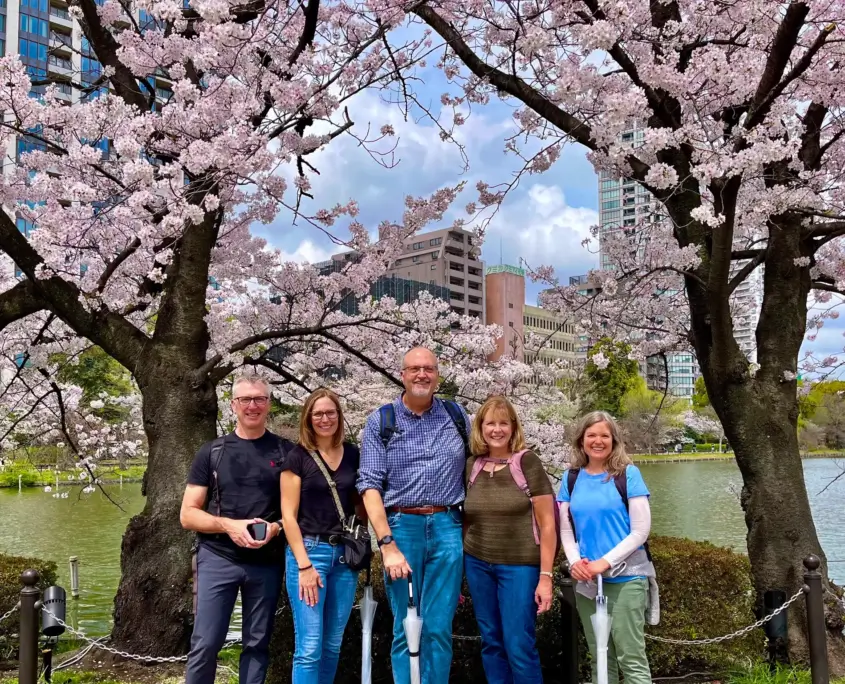
Tour Group Under Cherry Tree at Ueno Park
Protect the Root Systems
When participating in hanami, look down before you look up. Avoid setting up your tarp or blanket directly on visible roots. When the soil gets compacted from sitting, foot traffic, or heavy bags, the tree’s roots lose their ability to pull in the water and oxygen they need to survive.
Hanami Etiquette
If you’re planning on joining a hanami party, these are some practical rules to follow.

Traditional Boat in Cherry Tree Lined River
The Dos:
- Check for Alcohol Bans: Not every park allows drinking. Shinjuku Gyoen in Tokyo is a national garden, not a public park, and they have a strict no-alcohol policy.
- Carry Your Trash Out: Public trash cans are rare in Japan. During peak season, the few trash cans available will overflow. It’s always a good idea to have a plastic bag with you so you can carry your trash back to your hotel. Follow the example of the Japanese fans who cleaned up after themselves at the World Cup in Qatar.

Inuyama Castle Cherry Trees
The Don’ts:
- Don’t Take Up Too Much Space: It’s common to see blue tarps on the ground, but don’t claim a massive spot for a small group. Space is limited, and taking more than you need is seen as inconsiderate.
- Don’t Pick the Flowers: It’s actually illegal in many Japanese parks to pick the blossoms or break off a souvenir twig. You should wait for a cherry blossom petal to fall to the ground on its own and then pick it up.
- Don’t Be Too Loud: Hanami is a social event for enjoying the blossoms, friends, and life. It’s not a wild party. It’s best to keep your voice at a normal level so you don’t bother other people who are also enjoying the flowers.
What to Take Away
Enjoying the cherry blossoms in Japan comes down to one simple rule. Look, but don’t touch.
Think of the trees as living national treasures rather than just a backdrop. They’re best enjoyed with our eyes, leaving the branches, trunks, and roots untouched. To experience the season like a local, stick to the established paths, and plan to carry your trash back with you to your hotel.
Get a Deeper Look at Japan
Join one of our exclusive Small Group Tours for a trip that goes beyond the typical tourist experience.
 ©Pixabay
 ©JAPAN and more
 @JAPANandmore
 ©JAPAN and more
 @JAPANandmore
 @JAPANandmore




 @JAPANandmore