
 ©JAPANandmore.com
Japanese Kimono Trend: Why Tourists in Kimono Are Not Geisha
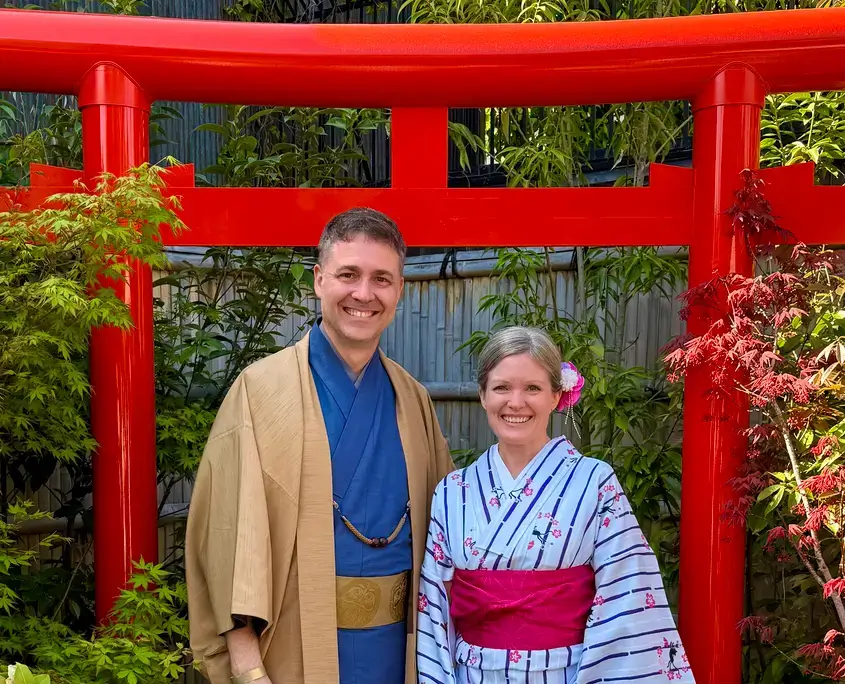
When visiting just about any major temple or shrine in Kyoto or Tokyo, you’re guaranteed to spot crowds of people elegantly dressed in Japanese kimono. Many first-time visitors to Japan feel a rush of excitement, instantly assuming they’re catching a rare glimpse of an elusive geisha. In reality, those aren’t geisha. What they’re actually seeing is a massive rental trend that has completely transformed these historic neighborhoods.
CONTENTS
The majority of people you see walking around the historic parts of Japan are not geisha. They’re everyday domestic and foreign tourists who simply walked into a neighborhood kimono rental shop. Renting a Japanese kimono has turned into one of the most popular sightseeing activities in the entire country.
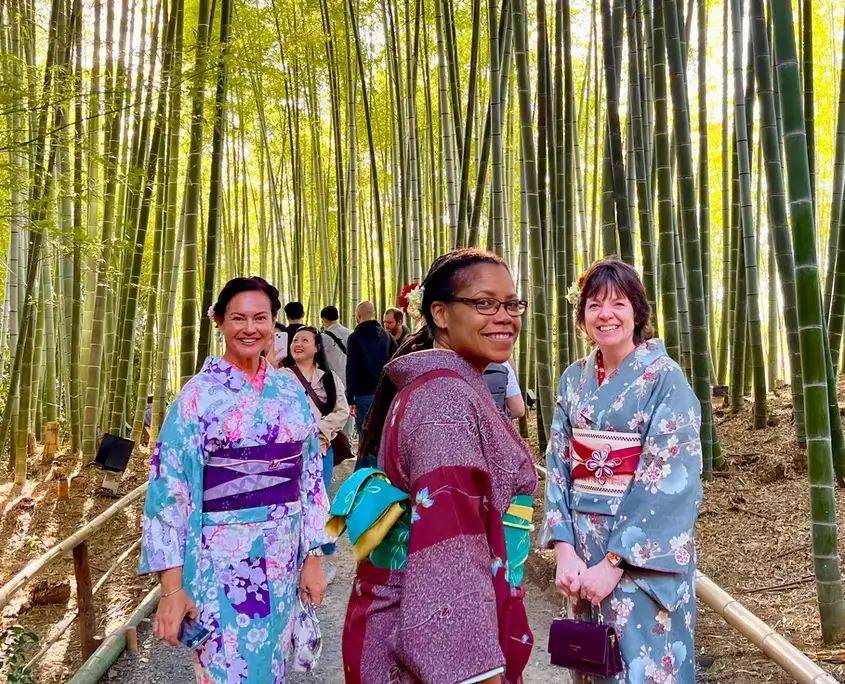
Our Tour Guests in Japanese Kimono
Understanding Japanese Kimono
Traditional Japanese clothing is collectively known as wafuku, which basically means Japanese clothing. The word kimono literally translates to a thing to wear. Historically, it was just the standard word for everyday clothing before Western styles arrived during the Meiji Restoration.
A standard Japanese kimono uses heavier fabrics like silk, wool, or high-grade polyester and requires a separate white undergarment collar called a nagajuban to be worn underneath. A yukata, which translates directly to bath cloth, is a lightweight, single-layer cotton garment meant strictly for casual summer wear and festivals. It’s often considered a summer version of the traditional Japanese kimono.
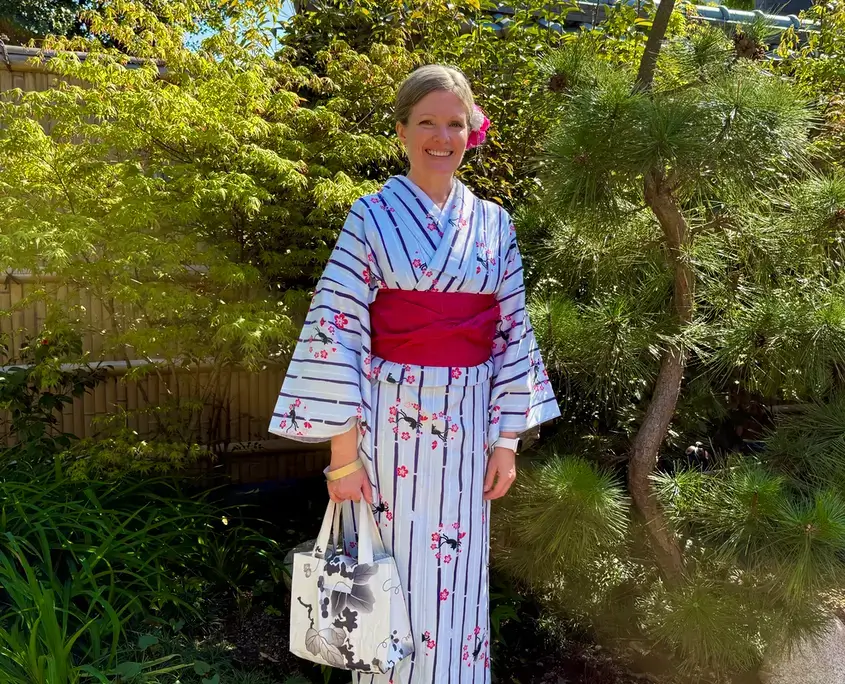
Becki wearing a Japanese Kimono
Origin of the Rental Boom
The Japanese kimono rental trend didn’t happen overnight. Decades ago, wearing a Japanese kimono was reserved for formal events like weddings, funerals, or coming-of-age ceremonies. The modern tourism shift began in Kyoto when historic textile companies pivoted to experiential travel to save their traditional industries.
The 190-year-old Okamoto Textile Company pioneered the industry with the goal of providing young travelers with an affordable, high-quality traditional experience. They recognized that the complicated art of putting a kimono on, known as kitsuke, was a huge barrier for both locals and tourists. By offering an all-inclusive package where professional stylists dress the client, they turned a dying formal art into an accessible, viral travel trend.
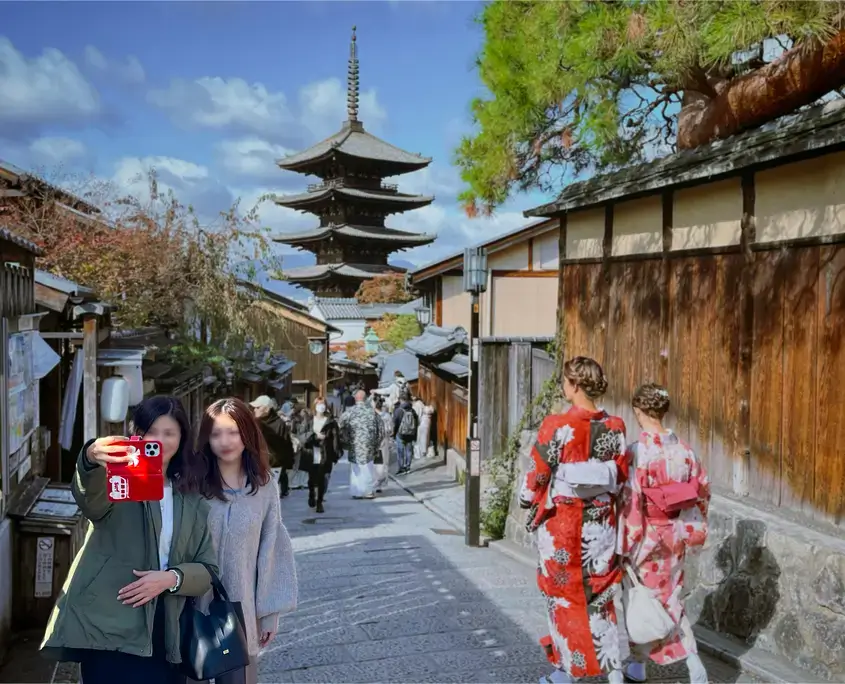
Tourists in Kimono in Higashiyama District
The Japanese Perspective
Western travelers are often concerned that dressing up in a Japanese kimono constitutes offensive cultural appropriation. They often worry that walking around in another culture’s historical dress will draw judgmental stares or cause offense to the locals. This is a classic example of the gap between Western expectations and Japanese reality.
The local population overwhelmingly views foreign tourists wearing a Japanese kimono as a deep sign of respect, admiration, and cultural appreciation, rather than appropriation. Japanese tourism boards and government entities actively promote these rental experiences because they fund local artisans, weavers, and traditional dressers. The only time locals feel any frustration is when tourists don’t follow basic public etiquette while wearing the garments.
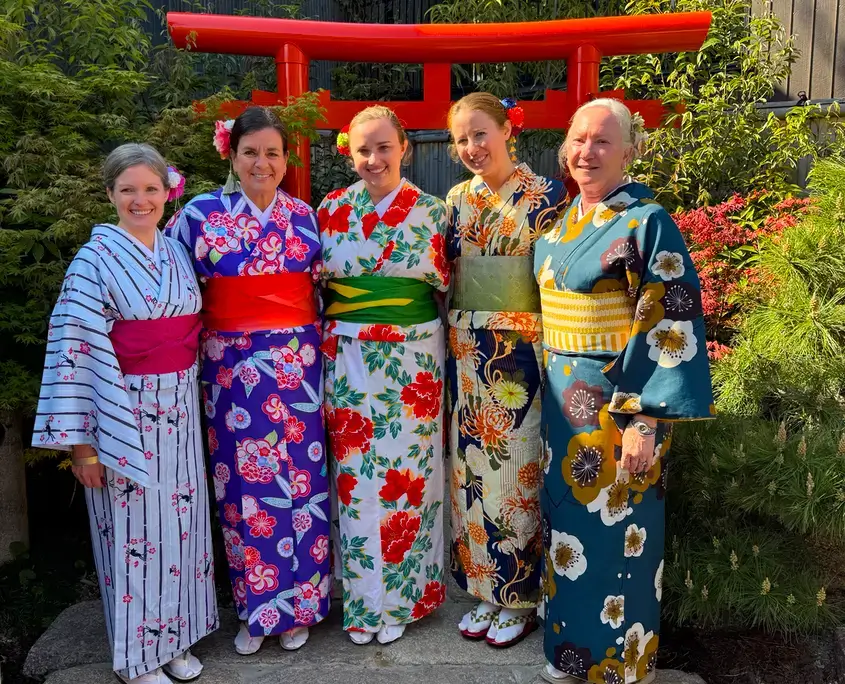
Becki with Tour Guests Dressed in Kimono
Why Locals Embrace the Japanese Kimono
It’s a common misconception that only foreign tourists participate in the rental craze. If you stop and listen to the crowds, you’ll quickly notice that a large percentage of the people renting Japanese kimono are actually young Japanese nationals. Couples on romantic weekend dates, college students on school trips, or friends celebrating a holiday.
Most young people live in cramped city apartments. They simply don’t have the space to store expensive, high-maintenance Japanese kimono. Renting allows them to enjoy the nostalgia of their traditional culture without the financial burden of purchasing a wardrobe that costs thousands of dollars. It serves as a fun, trendy way to disconnect from their fast-paced modern lives and step back into history for the afternoon.
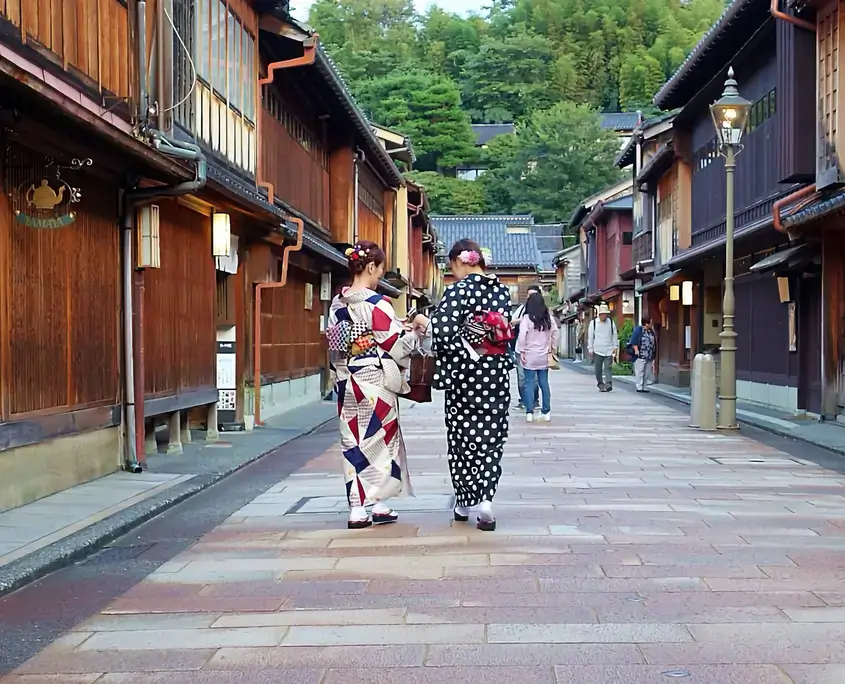
Young Japanese Women Wearing Kimono in Kanazawa, Japan
Photography Etiquette in Historic Districts
While the community loves seeing you wear a Japanese kimono, they’re highly protective of their neighborhoods. The massive influx of tourists chasing the perfect Instagram photo has created severe friction in historical preservation zones like Kyoto’s Gion district. You always want to learn the local photography rules to keep yourself out of trouble and avoid expensive fines.
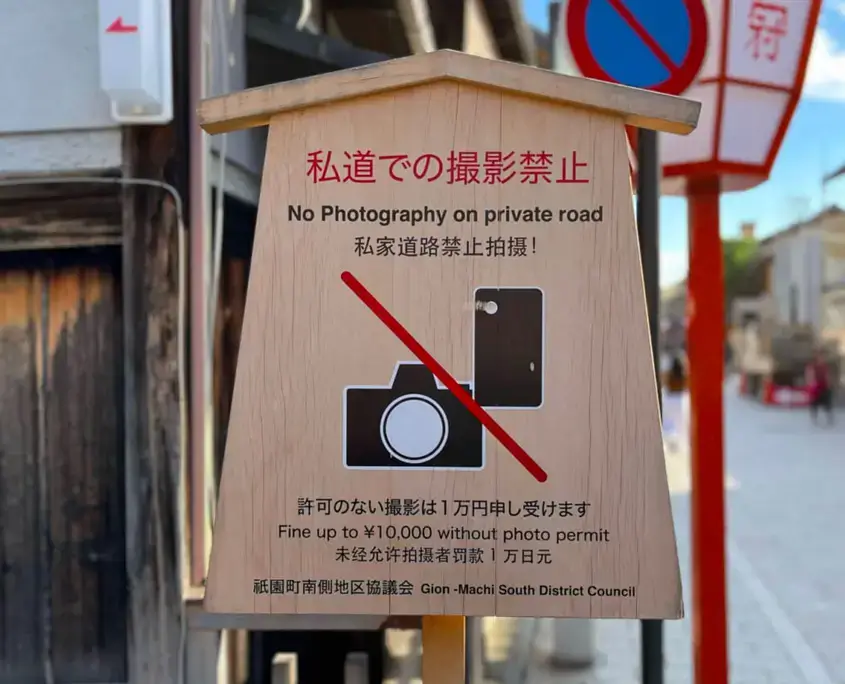
No Photography Sign in Gion District
Due to rampant bad behavior, local councils in Gion have posted official signs banning photography on all private side streets and residential alleys. Violations can result in an immediate fine of 10,000 yen. Stick exclusively to the wide, public main roads, and ensure that you never block the flow of traffic.
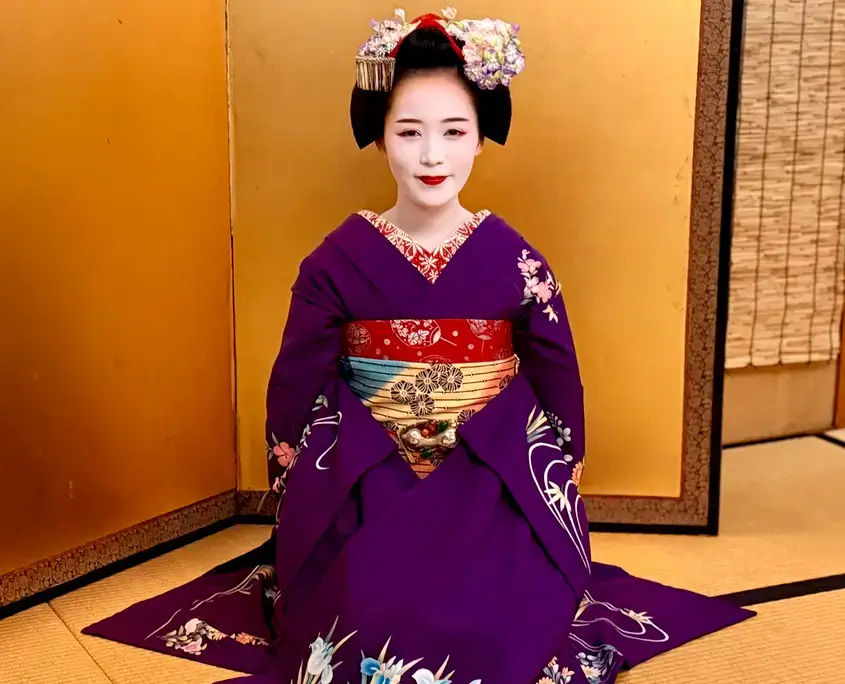
Maiko Sitting on Tatami at Private Dinner
Comfort Pitfalls to Avoid
If you decide to spend a day exploring in a rented Japanese kimono, you need to prepare for the physical reality of the traditional clothing. Walking several miles up and down steep slopes and stairs in flat, split-toe zori sandals can quickly take a toll on your feet.
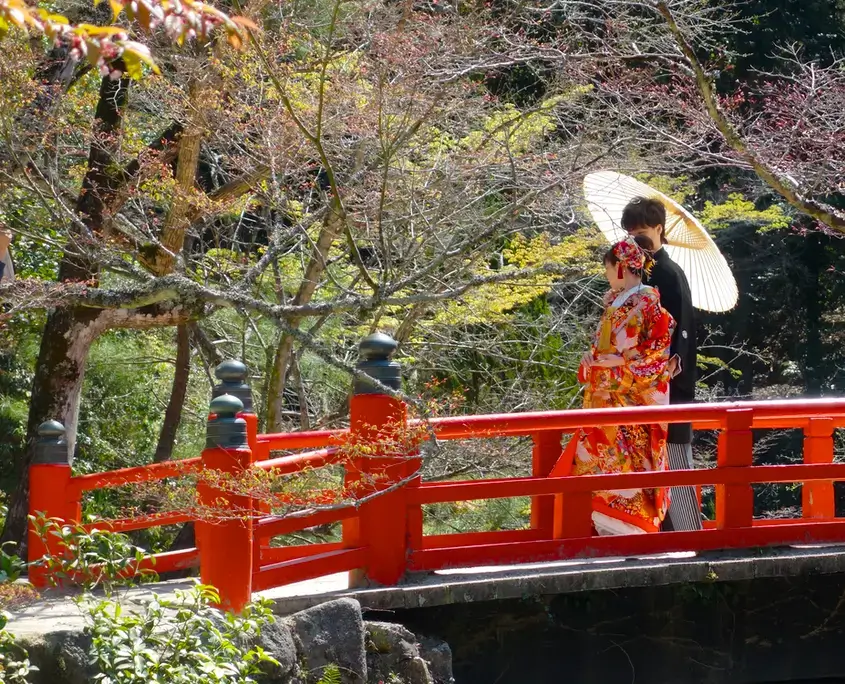
Wedding Couple on a Red Bridge in Miyajima, Japan
Lastly, be careful when eating while wearing a Japanese kimono. Rental shops are incredibly accommodating with normal wear and tear, but dropping dark, oil-based sauces onto a light-colored rental garment can ruin the fabric entirely. While basic stain insurance waivers can be purchased at checkout for a few hundred yen, a catastrophic stain might force the shop to charge you the full replacement value of the outfit.
What to Take Away
Stepping out in a Japanese kimono is an incredible, memorable way to immerse yourself in the living history of cities like Kyoto and Tokyo. Just remember to treat the clothing with care, respect the private residential alleyways, and remember that Japan isn’t an Instagram backdrop. A small amount of environmental awareness will ensure that the beautiful tradition of renting kimono stays available for future tourists to enjoy.
Get a Deeper Look at Japan
Join one of our exclusive Small Group Tours for a trip that goes beyond the typical tourist experience.
 ©JAPAN and more
 @JAPANandmore
 Pixabay
 ©JAPANandmore.com





 ©JAPANandmore.com
 ©JAPAN and more