
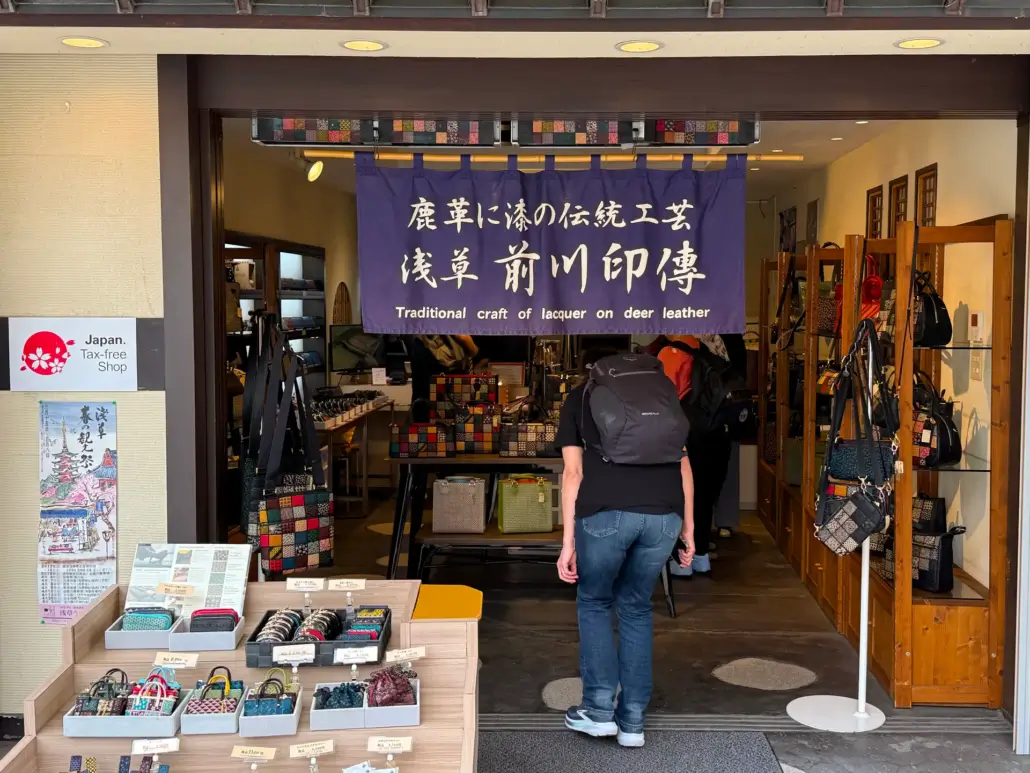
Koshu Inden: Japanese Deer Leather Accessories
If you’ve ever browsed a high-end department store in Japan, you might have come across some stunning Japanese deer leather accessories covered in intricate, textured patterns. These aren’t your typical mass-produced luxury handbags, wallets, and phone cases. Instead, Koshu Inden is a 400-year-old craft that gets its origins from the samurai battlefields.
CONTENTS
Brief History of Koshu Inden
The history of Koshu Inden goes back to the 1600s, during the Edo period. Foreign traders brought decorative leather pouches from India to Japan, and local craftsmen imitated the styles by combining native deerskin with traditional Japanese lacquer. This technique resulted in a durable, water-resistant, and beautiful material that quickly became a favorite among the upper class.
During the height of the samurai warring states period, high-ranking samurai and warlords favored Japanese deer leather for its incredible strength-to-weight ratio. It was regularly used in the making of high-end armor and helmets. The material was so highly prized that special smoking techniques were developed to help the leather last.
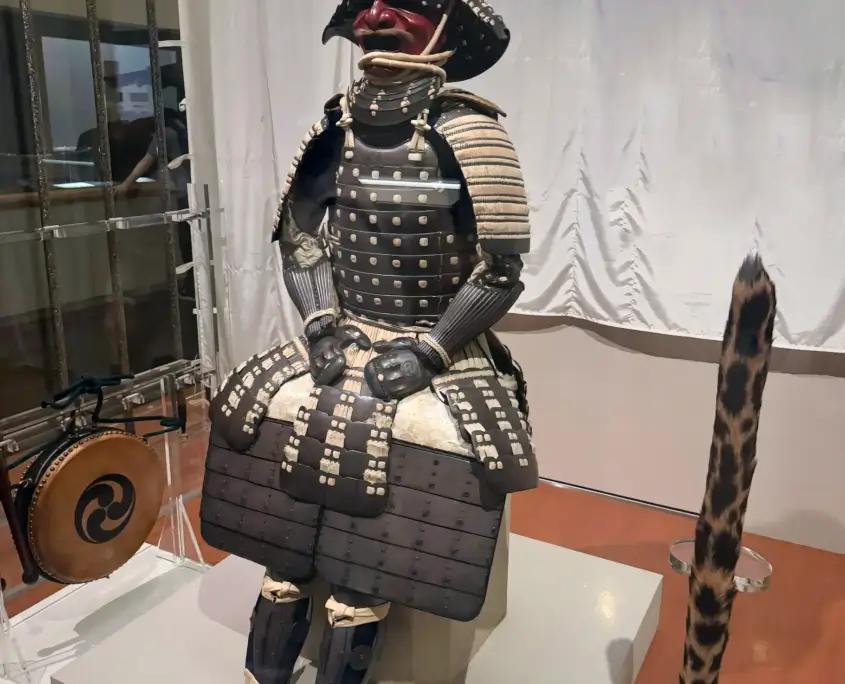
Samurai armor at the Tokugawa Art Museum in Nagoya, Japan.
Craftsmen started making common items like tobacco pouches, wallets, and drawstring bags that featured patterns that symbolize strength or good fortune. Today, only a handful of artisans work to keep this tradition alive by using the same methods that have been passed down for generations.
The Three Ancient Techniques
Lacquer Stenciling
Urushi-oki is the gold standard when it comes to lacquered Japanese deerskin. Craftsmen use hand-carved paper stencils called Ise-katagami to apply lacquer onto dyed leather. The pattern is slightly raised and feels like a small piece of colored glass.
Smoking
Fusube is a rare, high-level technique where the leather is colored using straw smoke and pine resin in a large wooden drum. It results in a distinct honey-brown color that smells faintly of woodsmoke. These pieces are expensive and rare because the process is extremely labor-intensive.
Color Printing
The Sarasa technique uses multiple stencils to create vibrant, multi-colored patterns before the final layer of lacquer is applied. This creates a depth of color that you won’t find in mass-produced goods.
Common Patterns and Their Meanings
The lacquer patterns on these items are beautiful. But like almost everything in Japan, there is a reason behind the designs.
The Dragonfly
The dragonfly, katsumushi in Japanese, is known as the victory insect because it only flies forward, never backward. It’s believed to have been the favorite of the samurai.
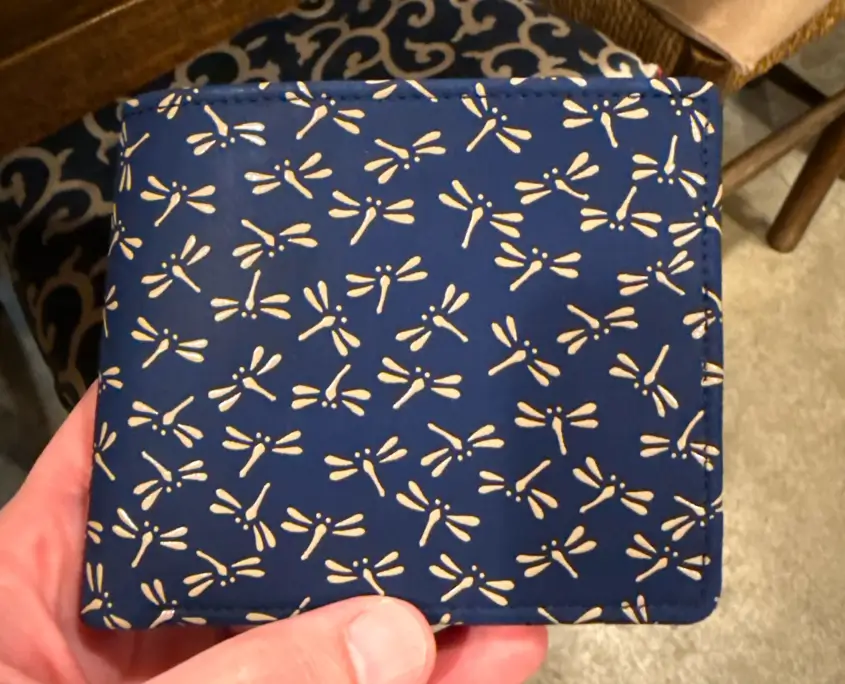
My Blue Koshu Inden Wallet with Dragonfly Pattern
The Cherry Blossom
Sakura Cherry blossoms represent the fleeting beauty of life and new beginnings. Viewing cherry blossoms pulls your attention to the present moment, reminding you to appreciate what’s right in front of you before it’s gone.
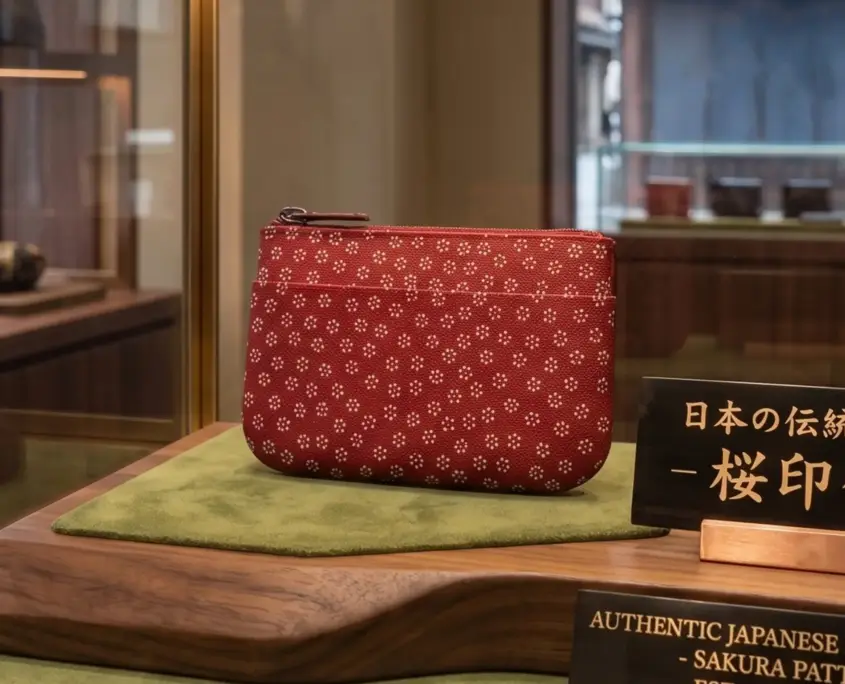
Women’s Red Koshu Inden Wallet with Cherry Blossom Pattern
The Iris
Called ayame in Japanese, the iris is a symbol of strength and protection against misfortune.
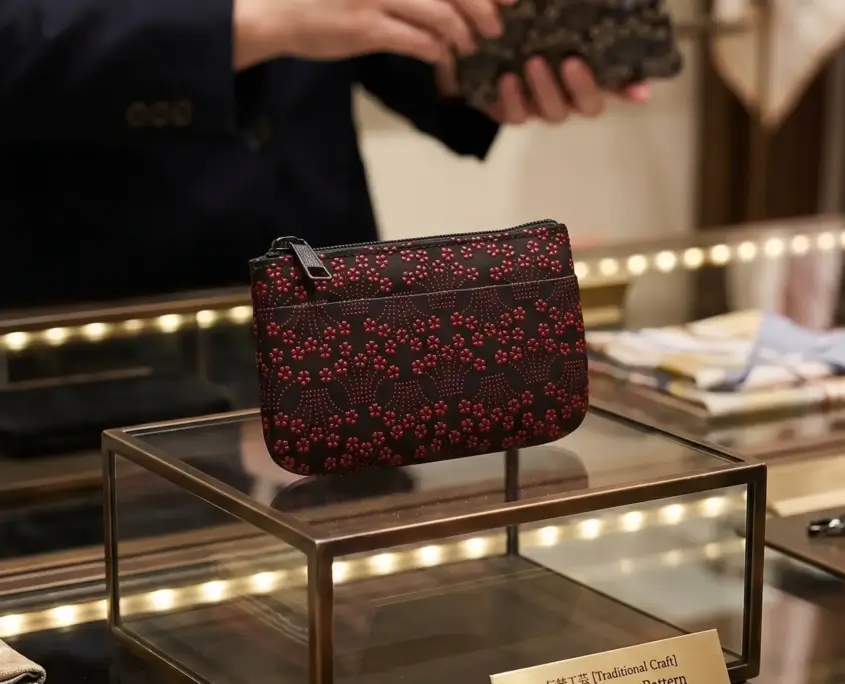
Women’s Black Koshu Inden Wallet with Red Iris Pattern
Samurai Loved It, and You Will Too
Legend says that the samurai lord, or daimyo, Takeda Shingen, used a lacquered deerskin case to carry his suits of armor. Samurai chose this Japanese deer leather for three key reasons that are still relevant to your wallet or handbag today.
- Strength with Zero Weight: Deerskin is incredibly light and has the rugged durability that keeps it from tearing even when put through the daily rigors of travel.
- The Grip Factor: The raised lacquer patterns aren’t just for show. They provide a practical, non-slip texture that gives you a secure grip on your wallet or phone case
- Durability: Koshu Inden doesn’t crack or peel over time. It actually grows more polished the more you use it, because the natural oils from your hands interact with the lacquer to create a seasoned finish.
Practical Buying Advice
When buying Japanese deer leather, it’s important to keep in mind that it stretches slightly over time. If you buy a card case or a passport holder, don’t worry if it’s a tight fit at first. It’ll stretch and loosen up a bit within a few weeks of use.
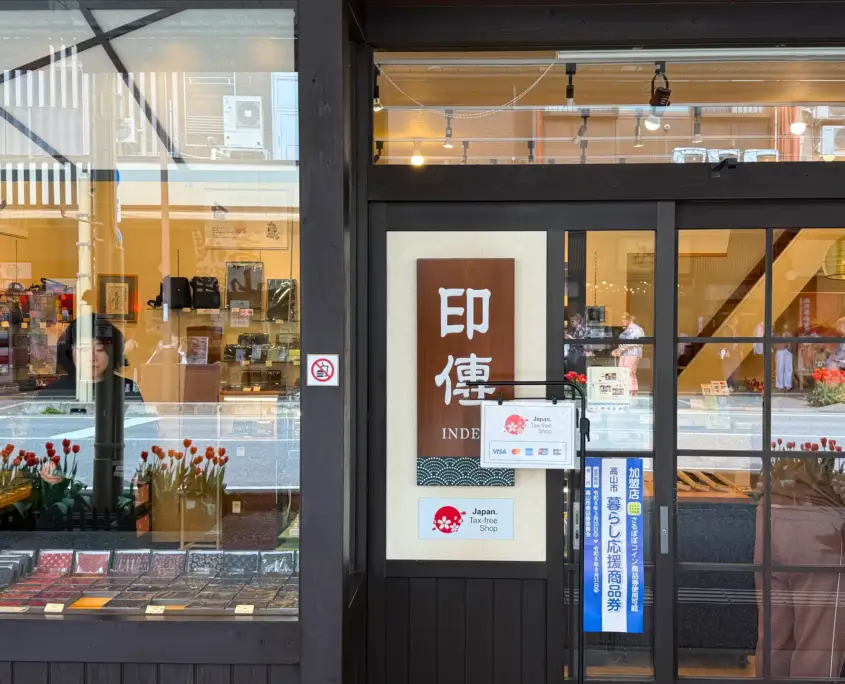
Koshu Inden Shop in Takayama that Sells Authentic Inden-ya Products
Authentic Manufacturers
Founded in 1582, Inden-ya is the industry leader and one of the oldest Koshu Inden producers in Japan. The same family has been making Japanese deer leather products for 13 generations.
Ikeda Inden is another reputable manufacturer based in Shizuoka. They’re known for blending traditional patterns with more contemporary accessory shapes.
What to Take Away
Koshu Inden Japanese deer leather makes a wonderful souvenir because it combines the refined elegance of Japanese craftsmanship with modern accessories. Whether it’s a cell phone case or a full-sized handbag, it’s a piece of history that you can actually use.
Get a Deeper Look at Japan
Join one of our exclusive Small Group Tours for a trip that goes beyond the typical tourist experience.
 @JAPANandmore
 ©JAPANandmore.com
 ©JAPAN and more
 ©JAPANandmore
 Pixabay
 @JAPANandmore



 AI Generated
 @JAPANandmore