
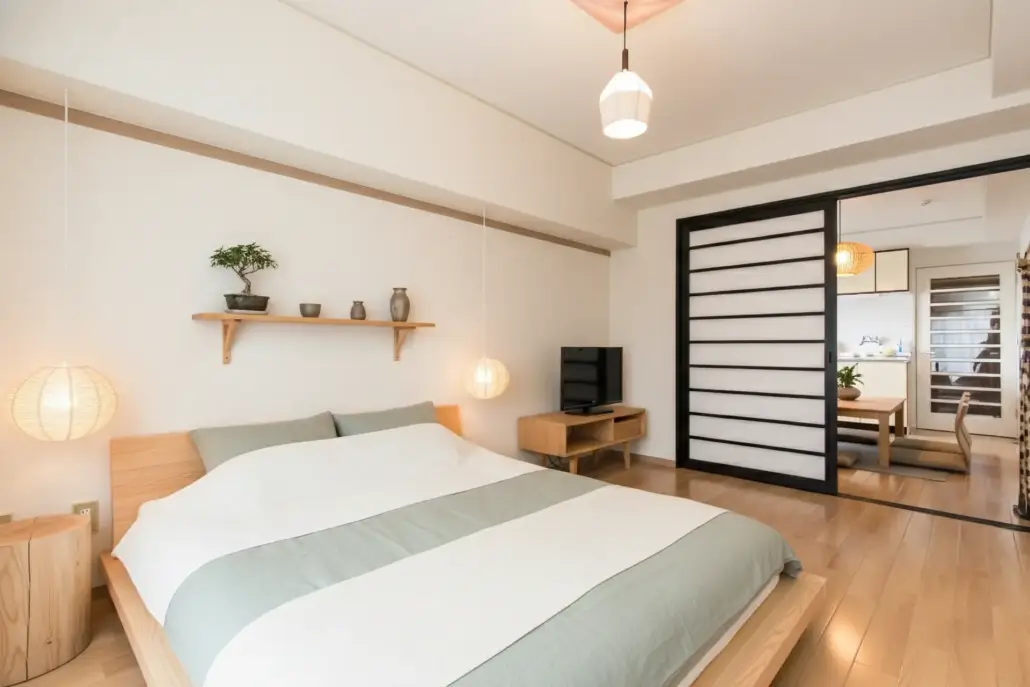
The Reality of Booking an Airbnb in Japan
Whether you’re traveling for business or a once-in-a-lifetime vacation, you’ve likely considered booking an Airbnb in Japan. On paper, it sounds like a fantastic experience. You get to stay in a local apartment with a kitchen and get a real neighborhood experience. However, there is a massive gap between Western expectations and the reality of Japanese culture.
CONTENTS
Today I’m going to break down the home-sharing market in Japan so you can decide if it’s worth the risk and see why I believe hotels are a better choice for a stress-free journey.
Japan’s Regulatory Crackdown
Before the summer of 2018, the home-sharing market in Japan was basically unregulated. Most hosts operated without licenses, leading to a clash with quiet residential neighborhoods. To fix this, the Japanese government stepped in with some of the strictest regulations on the planet.
The Private Lodging Business Act focused on the minpaku private lodgings, or short-term rentals that fall under the same category as an Airbnb. When this law went into effect, Airbnb was forced to delete nearly 80% of its listings almost overnight because the property owners weren’t properly registered. This sudden purge left thousands of travelers stranded with cancelled bookings just days before their trip.
Today, every legal Airbnb in Japan must be registered as either a private lodging or a hotel or inn. You can find the registration number on the listing page, usually at the bottom of the description or in the Hosted by section.
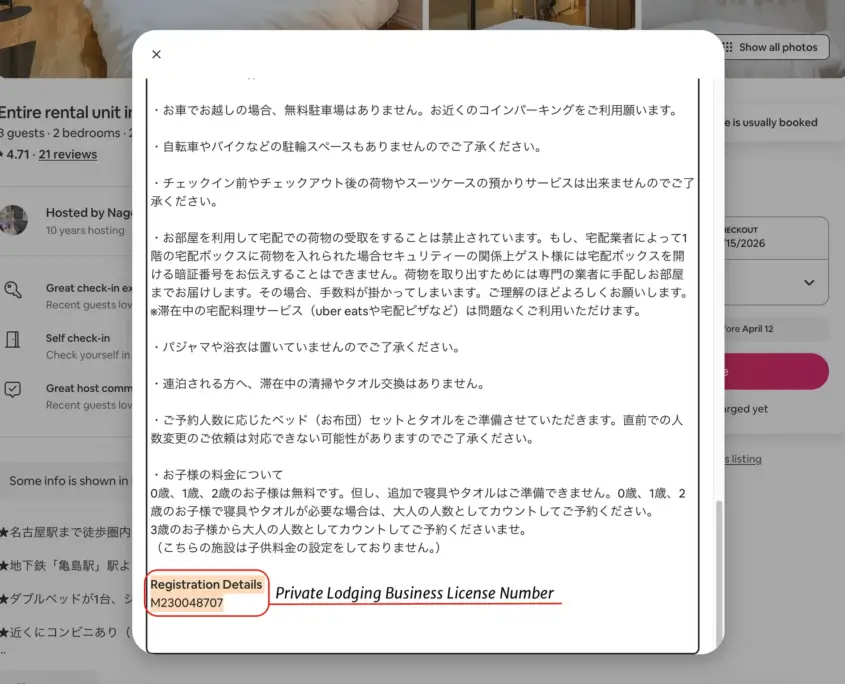
Private Lodging Business License for Airbnb in Japan
If you don’t see this information displayed, it may be an illegal property that could get shut down at any time. Be sure the property you’re considering has a registration number before booking.
The 180-Day Cap
Properties that are listed as minpaku have a 180-day rental cap. National law prevents them from being rented out for more than 180 nights per year. This means your saved property may not be available when you want to visit.
Some local wards have been known to add their own extra rules, called jourei, that are even more restrictive. For example, in Kyoto, many residential areas only allow short-term rentals during the off-season from January to March. This is to protect the peace and quiet of long-term residents during the busy cherry blossom months.
In Tokyo’s Shibuya and Shinjuku wards, some areas only allow rentals on weekends or during school holidays. These layers of red tape make finding a consistent, high-quality Airbnb in Japan a real challenge.
Registered Hotels and Inns on Airbnb
Listings that fall under the Hotels and Inns Business Act are basically hotels hiding in an apartment’s body. These establishments are a bit more reliable and don’t tend to have the common pitfall of last-minute cancellations.
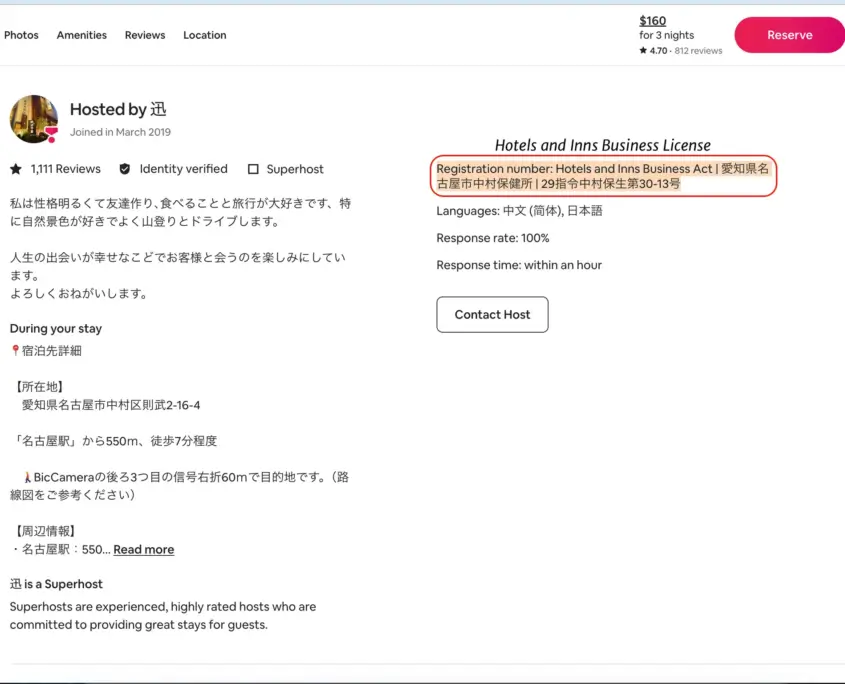
Private Lodging Business License for Airbnb in Japan
Why Hotels Are Still the Better Choice
While an apartment might look charming in photos, a professional hotel almost always offers a better experience. Hotels in Japan are famous for their hospitality. You simply won’t get that level of care from a lockbox and a set of PDF instructions.
Location, Location, Location
Let’s start with location and transportation. Most hotels are clustered right next to major hubs like Shinjuku, Shibuya, Ueno, or Tokyo Stations. Airbnb’s in Japan are often tucked away in residential areas that require a 10- to 15-minute walk through neighborhood alleyways with heavy suitcases.
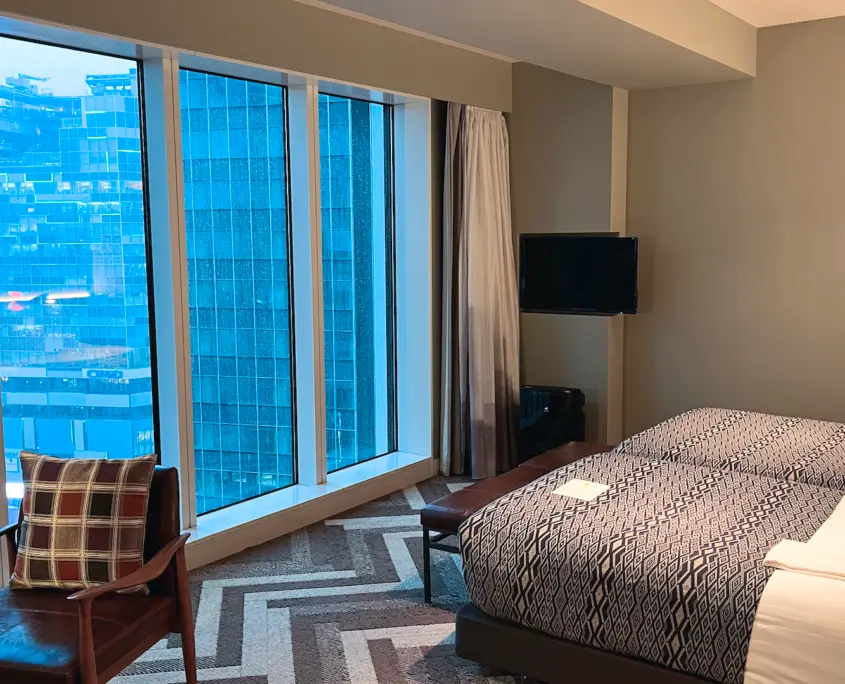
Shibuya Stream Hotel in the Shibuya Ward of Tokyo, Japan
A Helping Hand
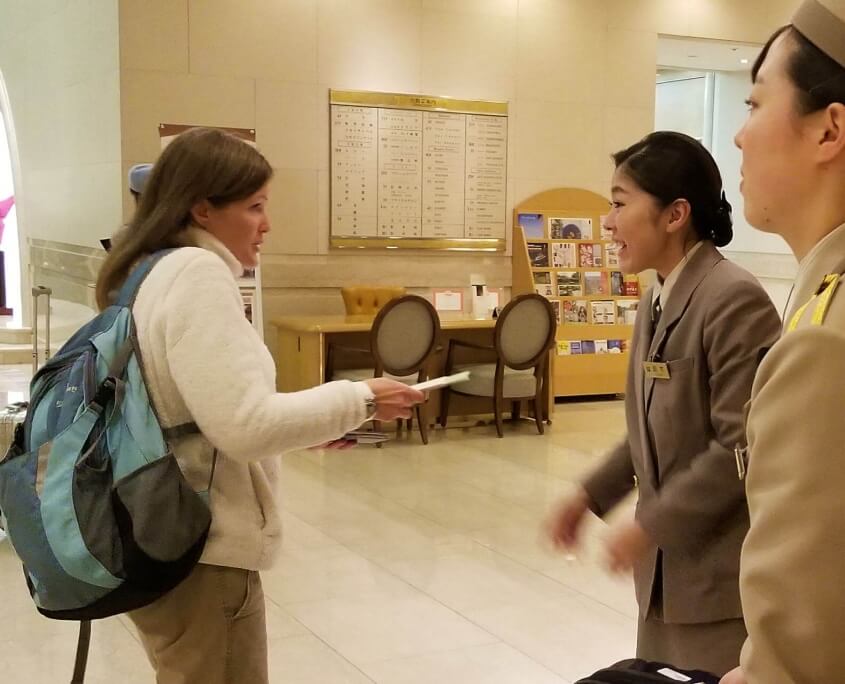
Hotels have on-duty staff 24 hours a day. If your Wi-Fi dies, if your heater breaks, if there’s a major earthquake, or if you have a medical emergency, there’s always someone on staff to help you.
Luggage Logistics
One of the biggest advantages of traveling in Japan is using the luggage forwarding, takkyubin, service. This allows you to send your heavy suitcases from one hotel to the next for a very reasonable fee.
Hotels have staff members that will help you with the preparation and paperwork. However, an Airbnb in Japan can’t handle these deliveries because there isn’t anyone on-site to measure your suitcases and fill out the paperwork. So, you’ll be left dragging your bags to a convenience store and struggling through the forms yourself.
Another pitfall of Airbnbs in Japan is the checkout process. Most hosts require you to be out by 10:00 AM and have zero space to store your bags, meaning you’ll spend your final afternoon hunting for an empty coin locker at a station.
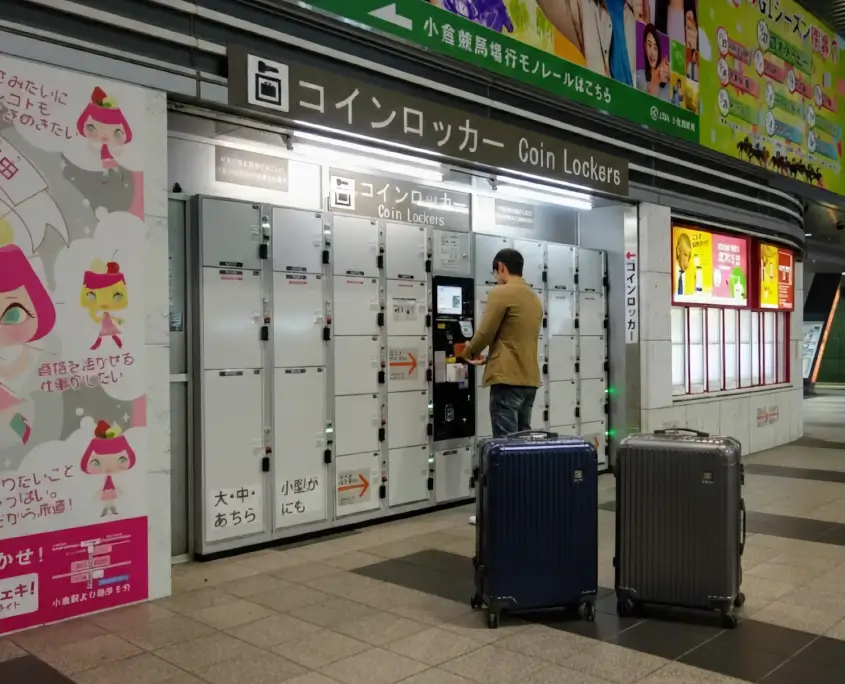
Man at Coin Lockers with Luggage
The Reality of Residential Social Rules
Staying in a residential building means you’re a temporary neighbor and are expected to follow the very strict Japanese social rules.
Noise
Apartment walls are thin, and many locals find the noise level of tourists to be a major nuisance. There have even been numerous complaints from locals about the sound of hard-shell suitcases rolling over pavement and through hallways at odd hours of the day. Japanese residential areas are notoriously quiet. Even a normal speaking voice in an apartment hallway or narrow alleyway can travel right through the thin walls.
Trash
Trash is another sore spot with residents. Separating trash in Japan is methodical. All wards in Japan have residents separate their trash to some degree.
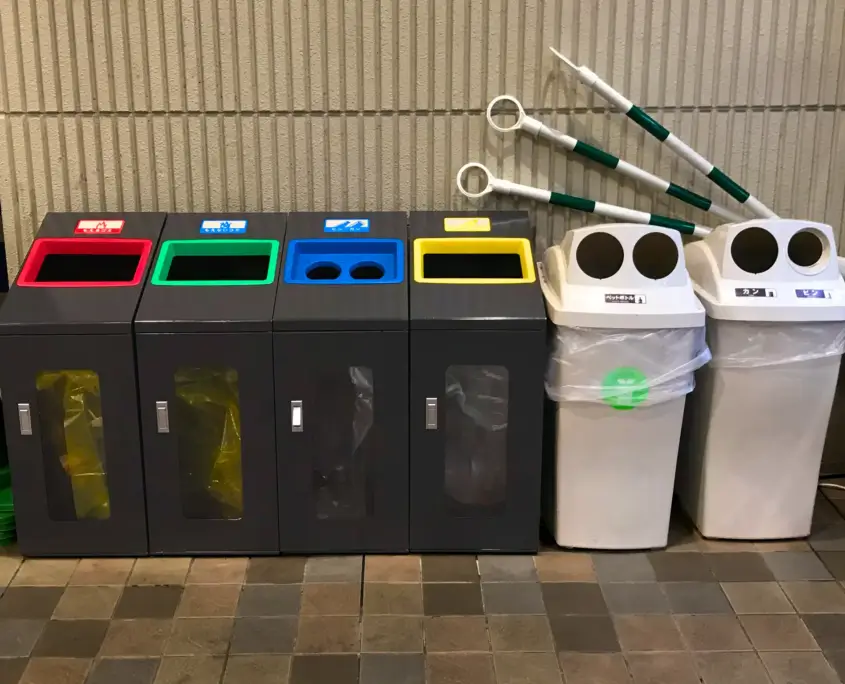
Public Trash Cans at Nagoya Dome Aeon Mall
Even though we’ve lived in Japan since the late 90s and have a solid grasp on these strict trash regulations, in every Airbnb in Japan, the host has asked us to just pile our garbage on the back patio rather than explaining the actual pickup schedule. This tells me that the hosts are likely trying to hide the tourist trash from their neighbors.
What to Take Away
While an Airbnb in Japan might offer a bit more space and a kitchen, it rarely makes up for the loss of hospitality you get from a Japanese hotel. Between the lack of luggage support, the inconvenient locations, and the displeased neighbors, hotels win every time. You get better service, easier transit, and a much higher standard of cleanliness. I say, leave the residential apartments to the locals and stick with the hospitality professionals.
Want a Unique Japan Trip?
Discover Japan planning secrets with our best-selling Itinerary Planning Course. Or inquire about our exclusive Small Group Tours.
 ©JAPANandmore.com
 ©JAPAN and more
 @JAPANandmore
 ©JAPANandmore.com
 @JAPANandmore



 AI Generated